
In preindustrial Earth, wool trade was complicated and important. In Scarterra, wool trade is complicated and important.
The base level of producing wool is a sheep. So the core mortal component of Scarterra's wool trade is the shepherd.
Career
Payment & Reimbursement

by Me with Midjourney
Village shepherds tend to make comparable income to the farmers they work with, maybe a little bit more as they often have slightlylonger hours and slighlty more hazards than the average farmer. Tend to average about 3 or 4 copper pieces a day or the equivalent.
Roaming shepherds usually make a lot more than vilage shepherds tend to get because they have to deal with the hazards of dealing with whatever scary things come out of the wilderness. Often making 6 or 7 copper pieces a day on average.
Perception
Purpose
The most valuable product of a sheep is wool, but waste in Scarterra tabboo so any resource will be exploited in every possible.
Large parts of crops are inedible to mortals, sheep can eat some of this and then poop in the those same fields to fertilize the next harvest.
Sheep are milked and mortals sometimes drink the milk, but more often than not it's fermented into cheese. And at the end of a sheep's useful it becomes mutton.
Demographics
Shepherds are usually drawn from all-shepherd familis, so men, women, and children are all involved.
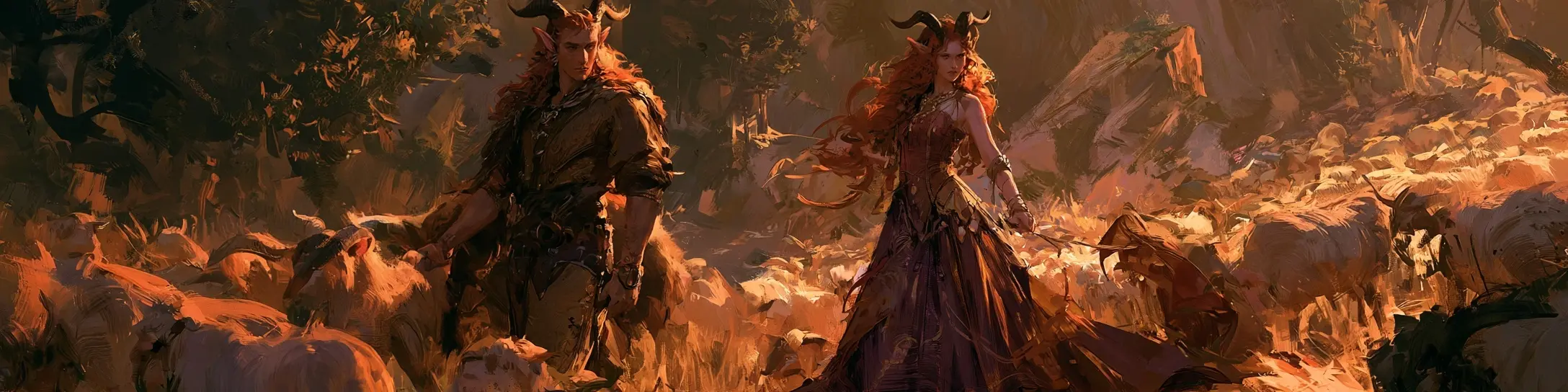
Humans, gnomes, and satyrs frequently become shepherds.
Dwarves value wool and keep sheep when they can, but they tend to favor goats over sheep as well as llamas.
Elves also like wool and keep sheep when they can, but the three major Elven nations don't have a lot of pasture land well-suited to sheep cultivation. Wood elves tend wear more furs and leathers to make up for their relative lack of wool. Dark elves and grey elves grow a lot of plant based textiles such as cotton and linen.
Dwarves and elves often find it more convenient to buy wool from humans rather than produce it themselves.
History
There's a theory in some academic circles that chimeras were the first Scarterrans to domesticate sheep. Chimeras certainly were known to be successful herders, so that's certainly possible, but the dragons generally considered chimera to be beneath their notice, so they didn't keep detailed notes of what the chimeras were doing and we'll probably never know. We think the first sheep were domesticated en masse during the the Second Age. Records indicate that elves valued wool and other sheep products but they didn't like herding. The earliest elf nations had lots of elven shepherds but as elven kingdoms grew and by pen or sword absorbed non-elven citizens under their banners, they turned over herding duties to non-elves, especially satyrs. After the Second Unmaking came to an end, all the elves with knowledge of herding were dead, but enough satyrs survived who remembered the practice that satyrs were the first to gather up the surviving sheep and rebuild their flocks. Humans are less averse to herding than ancient elves were, but even today, satyrs are disproportionally represented among the shepherd profession."by Eron12 with Hero Forge"Based on surviving historical records, sheep were either not kept at all duringthe First Age or else they were a rarely kept. Dragons and giants don't need wool garments to stay warm. They certainly can eat mutton and cheese, but sheep are barely a bite for them. The dragons and their thurekal generally favored larger livestock, usually horse-sized or larger.

Operations
Workplace
We live hand in glove with the local farmers and have arrangements with the local farmers so our sheep can graze on their crop's unused husks and we in turn give them sheep dung to fertilize their fields. And we end up trading wool to farmers in exchange for some of their suprlus crops. Any land used for pasture is land not being used for farming, so most villages only keep just enough pasture to meet their own needs. It takes a lot of sheep to meet the wool demand for a town and cities. Space is the scarcest research of all in towns or cities do not have the luxury of being able to have giant herds of sheep in their borders. Roaming shepherds live in "Sheep Country". "Sheep Country" is generally any settled land that is not particularly well-suited to farming. These areas tend to have lots of sheep and very few people. And wool and cheese is transported long distances to meet the needs of towns, castles, ports, and the like. Managing large numbers of sheep is difficult in and of itself, but roaming shepherds have to be quick witted and tough because they need to manage their sheep and be able defend them from whatever threatens them.-Aunt Ragani the sheep and goat herderby Me with Hero ForgeThere are three basic types of shepherds based on where they work and who they work for. The three types are "village shepherds", "roaming shepherds", and "castle shepherds". I am a village shepherd. My husband's clan manages most of the sheep in our village and we work for the village. The wool we produce goes to our village, not for export.Castle Shepherds
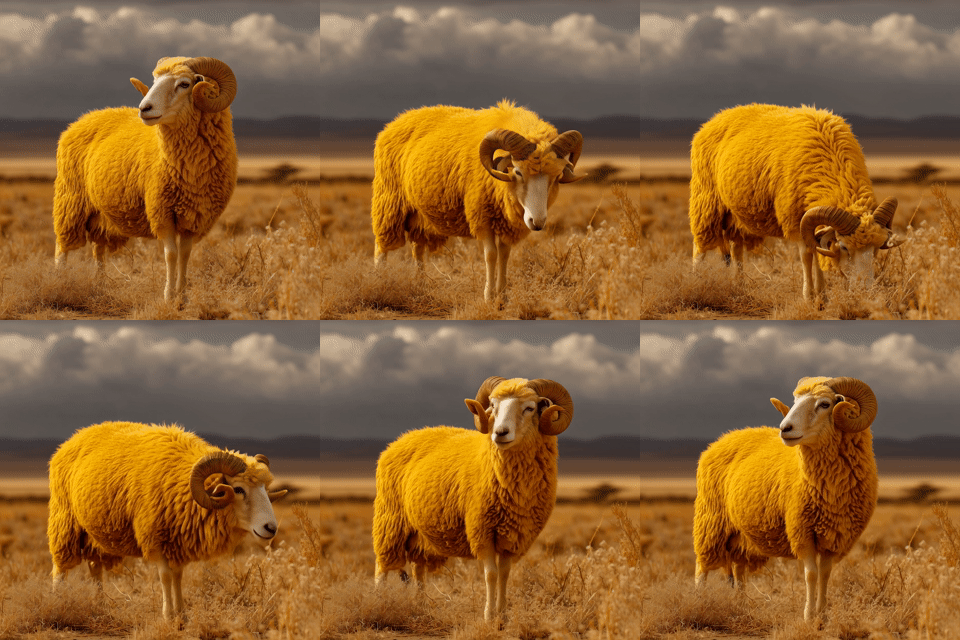
Some sheep are born with wool in rare colors or textures, or rare colors and textures and these sheep produce wool of exceptional value worth between three and ten times ordinary wool. Shepherds can try to use selective breeding to breed rams and ewes with extra valuable fleeces, but this is easier said than done. Rams are horny in more ways than more and it's hard to get sheep not to breed indiscriminately. Most village shepherds and roaming shepherds don't bother trying to selectively breed their flocks, but sometimes by dumb luck we end up with lambs that are born with especially valuable fleeces. When this happens we usually sell our lambs to a castle shepherds. Castle shepherds do try to selectively breed sheep and they careful manage sheep with rare fleeces in order to sell high end wool to the nobility. They are usually part of the retinue of a lord or lady. Most castle shepherds don't actually live in castles, but they tend to live in nice houses in the shadow of castles."

Provided Services
Shepherds watch over and take care of their flocks of sheep. They shear the sheep and frequently make the cheese or other dairy products. Shepherds usually don't have the time and opportunity to spin or weave the wool thread.
Grass goes into sheep. Sheep produce wool. Wool is sheared. Wool is spun into thread. Thread is sewn into cloth, and cloth is sewn into garments. Shepherds usually drop out of the pipleline after the after the shearing step.
As elderly shepherds and shepherdesses age out of field work, they tend to transition into processing sheep rather than raising sheep, making cheese and weaving thread, etc.

Village shepherds tend to give their raw wool to farmers who process for them. Roaming shepherd's wool tends to move in large well-guarded carvans into towns where they are sold to trading guilds and the like in bulk.
Castle shepherds are the exception. They deal with high end rare wools, and are aiming for quality over quantity, so and they (or their families) often try to capture every aspect of the sheep to clothes pipeline, including actually making the cloth.
by me with Midjourney
Dangers & Hazards
Even in the 21st century Earth, shepherds have to work hard to protect their sheep from predators and other natural hazards as well as two-legged thieves who can potentially steal sheep. This was even harder in preindustrial times.
In Scarterra this problem is compounded by the existance of fantasy creatures. Goblins certainly kill a lot of humans, but they goblins are cowardly and opportunistic. As much as they like eating humans it's less trouble and less risk to steal sheep. This same logic applies to intelligent monsters and very monstrous beasts. Even Fair Folk and Sprites sometimes snatch sheeps (or shepherds).
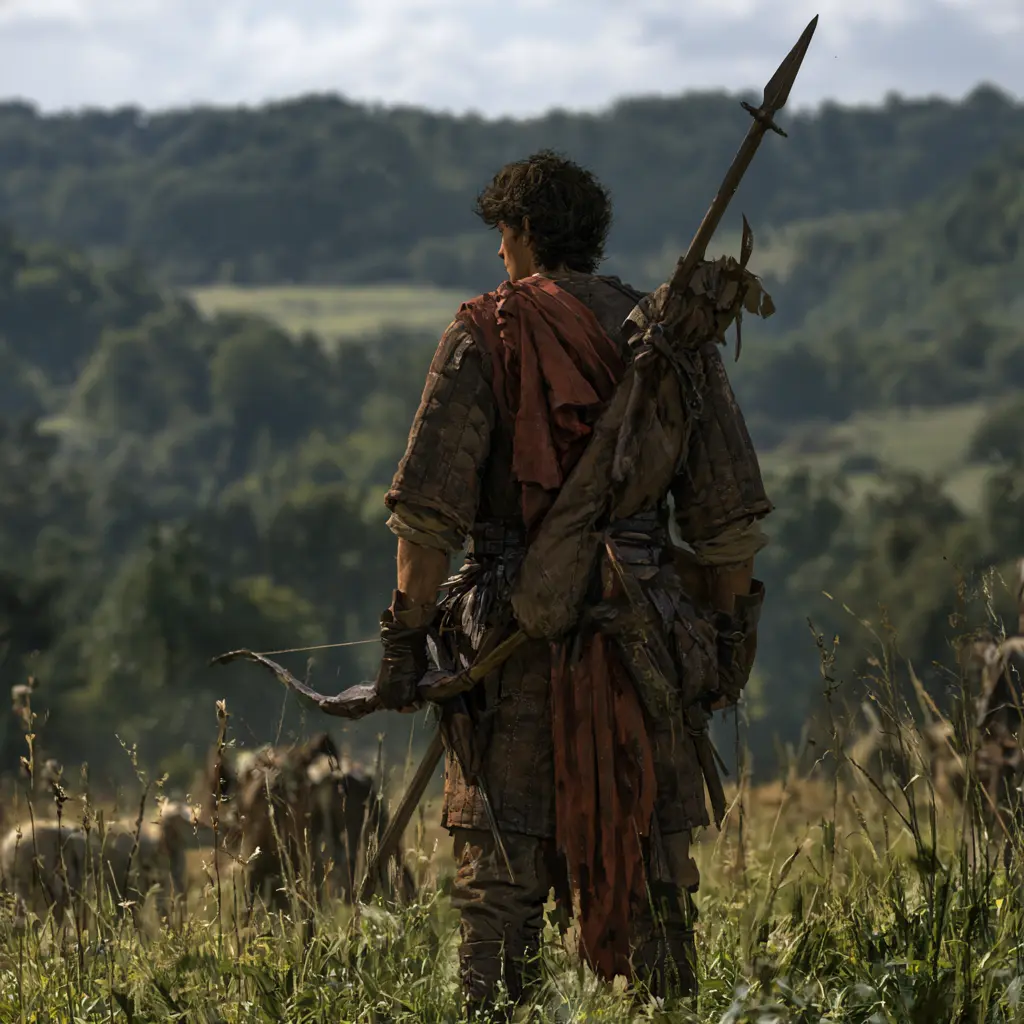
"Sheep Country" in Scarterra is usually in the nebulous middle ground between "civilization" and "wilderness", so shepherds are often the first line of defense against the "Here There Be Monsters" section of the map.
This means a lot of shepherds are well-armed, tough, and quick witted. Testers tend to be bullies and sociopaths that believe they are morally justified to extort common people at will, but they often leave shepherds alone out of professional courtesy. The Herders of Men are a Tester faction that even goes out of their way to help shepherds.
by Me with Midjourney
Type
Agricultural / Fishing / Forestry
Demand
high
Legality
Textiles is the number two industry in Scarterra after food. Wool is the most common textile worn in Scarterra, so wool is big business.
Grass feeds sheep. Sheep produce wool. Wool is spun into thread, and thread is woven into cloth, and cloth is tailored into clothing. Then the clothing has to be delivered to the person wearing it. At every step there in the process there is a point where the local nobles can insert themselves into the process.
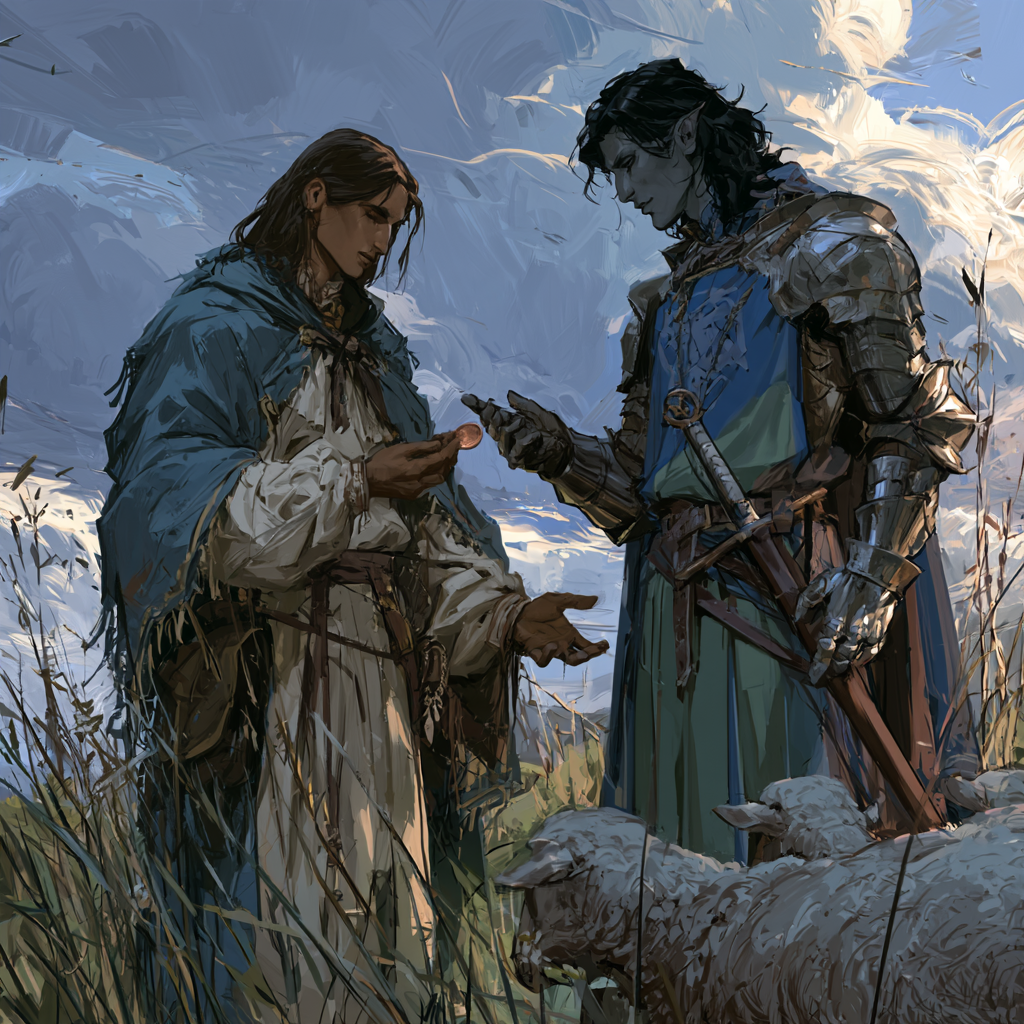
The biggest limiting factor is usually the grass. Large swaths of pastureland are usually claimed by nobles, so this is where nobles tend to impose taxes on the wool pipeline. They usually don't tax people who own sheep, but they will impose taxes and tolls when people move sheep. Grazing sheep on the lord's pasture, that's a toll. Moving sheep on the lord's road. That's a toll. Selling sheep at a lord's market square, that's a toll. Moving bales of wool in a merchant's caravan, that's a toll. These are usually very small tolls but they add up over time. And if a shepherd or wool merchant is caught trying to do dodge these tolls, they face a fine that is much larger than the tolls would be.
 Spinning wheels are relatively easy to make, and spinning is easy to start and stop mid process, so families can work on spinning in free moments between other taxes. Almost anyone can do it, so almost every household does do it as a little side hustle, often done by the wives and daughters of the households. Because this part of the process is so decentralized, most lords don't bother trying to figure out a way to tax this.
Turning spun wool into cloth and clothes takes more specialized equipment and training, aka capital investments. About half the value of a finished wool garment is done at this stage and goes to the men and women with the capital. This is where the trade guilds assert themselves by setting standards for who can do what and when. Because textiles is such an important industry, weavers and tailors guild have a lot of influence in guild politics, and they are often strong enough politically to force nobles to give them low taxes. Unless the merchant and tradesmen are stuck at loggerheads in which case a wily noble can play them off each other.
Finally after all that, when finished clothes are moved in merchant caravans or sold in market squares there is one more small toll levied on the transaction.
Spinning wheels are relatively easy to make, and spinning is easy to start and stop mid process, so families can work on spinning in free moments between other taxes. Almost anyone can do it, so almost every household does do it as a little side hustle, often done by the wives and daughters of the households. Because this part of the process is so decentralized, most lords don't bother trying to figure out a way to tax this.
Turning spun wool into cloth and clothes takes more specialized equipment and training, aka capital investments. About half the value of a finished wool garment is done at this stage and goes to the men and women with the capital. This is where the trade guilds assert themselves by setting standards for who can do what and when. Because textiles is such an important industry, weavers and tailors guild have a lot of influence in guild politics, and they are often strong enough politically to force nobles to give them low taxes. Unless the merchant and tradesmen are stuck at loggerheads in which case a wily noble can play them off each other.
Finally after all that, when finished clothes are moved in merchant caravans or sold in market squares there is one more small toll levied on the transaction.
by Me with Midjourney
Other Associated professions
Related Locations
by me with Midjourney

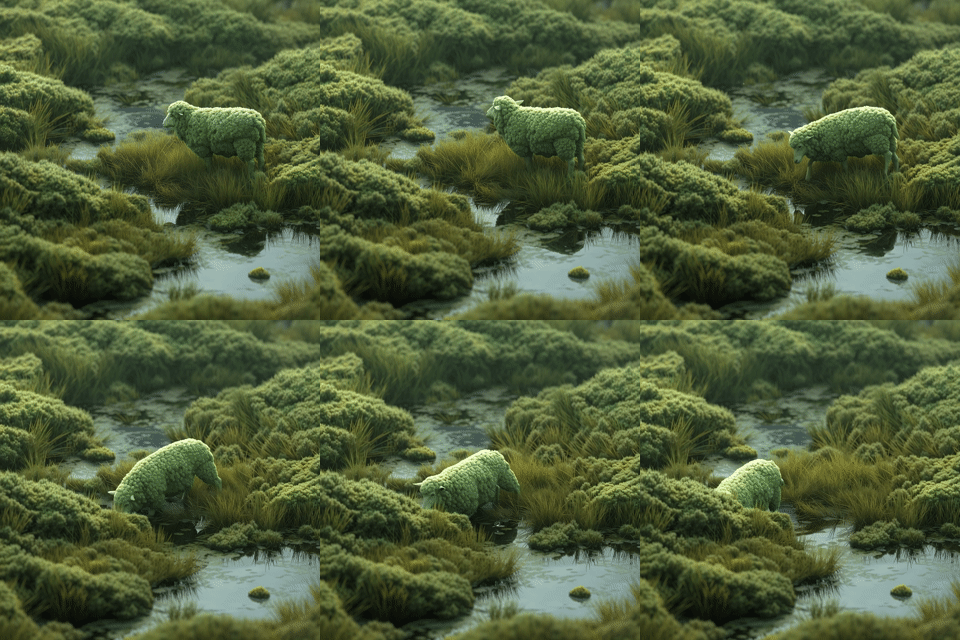
by me with Midjourney

by me with Midjourney
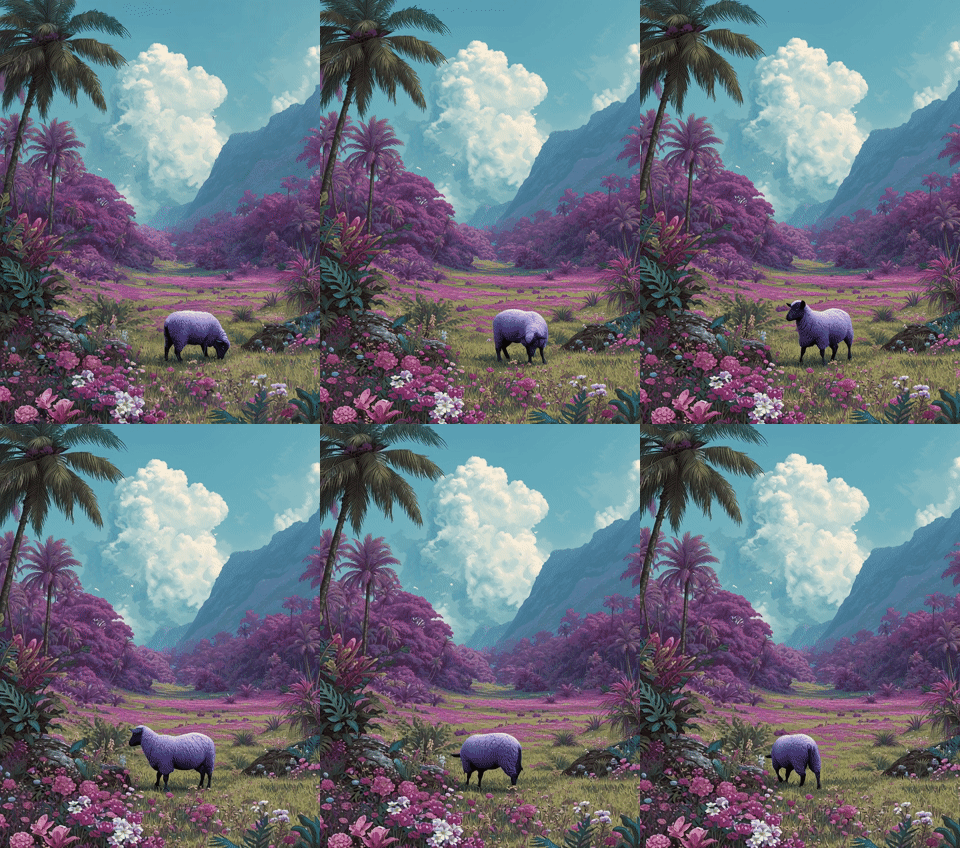
by me with Midjourney

Comments