
Writs of the Nonagon
A Writ of the Nonagon is when the leaders of five or more major local religious factions to tell their local ruler "We approve of your actions" or "we disprove of your recent actions." These are relatively rare, because it's hard to get five major priesthoods to agree on anything.
All of Scarterra collectively worships the same nine deities, but most of the the Nine's respective priesthoods are all pushing for their agenda to be "slightly" more influential. Collectively, the major priesthoods are called "The Nonagon" in a way someone might say "the Nobility" or "the Peasantry". Even though the Nonagon is hardly a unified block (much like "the Nobility" and "the Peasantry" are seldom qualify as unified blocs).
Kings and queens, dukes and duchesses, counts and countesses, barons and baronesses and various leaders of Scarterra's fledgling republics are used to high priests and priestesses officials either praising their actions or complaining about them. Normally at any given point, several Nonagon officials are happy with them and several Nonagon officials are unhappy with them. This is almost background noise to a ruler.
Writs of the Nonagon are purely symbolic with no binding legal power, but symbols hold power. But when the Nonagon acts in unison, only a foolish ruler will ignore it.
Any ruler can receive a Writ of the Nonagon be it a mighty king or lowly Baron, but Writs of the Nonagon are more commonly written for the decisions of high level feudal lords. A low level feudal lord, the priests will likely walk in and tell the Baroness to her face what he thinks as opposed to putting it in writing.
History
Monarchists and Anti-Monarchists
The Lanterns, Rovers, Testers, and Children are traditionally anti-authoritarian. If they are showing support to local rulers, this carries additional weight. TheTenders, Keepers, Guardians, and Masks are traditionally be pro-status quo. If they are showing dissent against the local rulers, this carries additional weight.Strange Bedfellows
The Nine themselves are essentially a barely functional family made up of frienemies with a lot of essentially eternal rivalries and these rivalries carry over into the mortal plane.
The Tenders and the Children are usually at odds with each other.
The Lanterns and Masks and are usually at odds with each other.
The Testers and Guardians and are usually at odds with each other.
The Rovers and Keepers are usually at odds with each other.

Composite Display of the Nine's portraits by Zeta Gardner
Execution
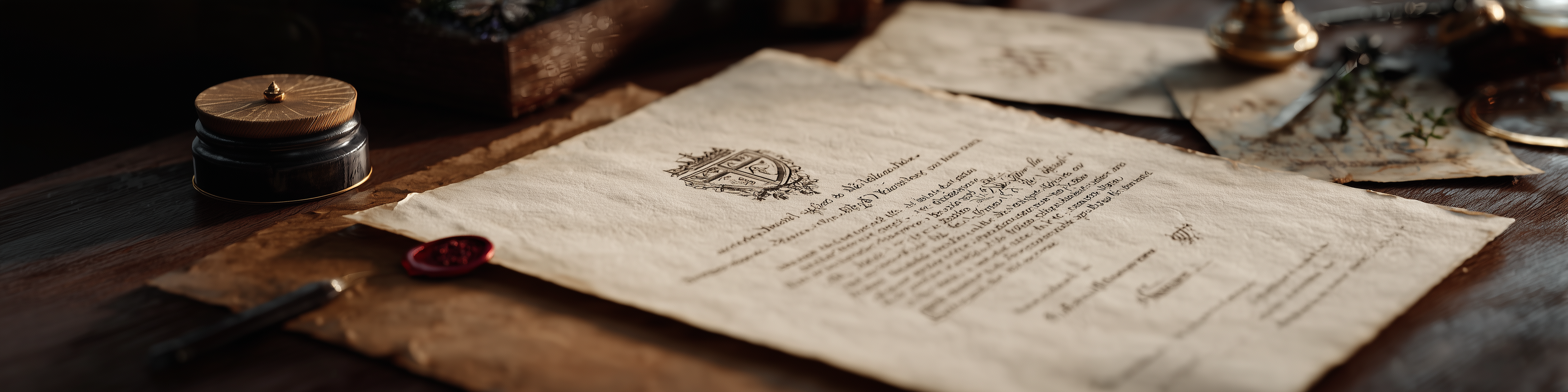
A Writ of the Nonagon will start with something along the lines of:
We the representatives of the sacred traditions of the Nine in (insert country or province here), believe that (insert ruler's name here, with full formalities), made a (wise decision/unwise decision) by (insert policy or edict here).
Each of the factions will attach explaining why their group is signing onto the Writ of the Nonagon.
Sometimes dissenting views from priesthoods that don't agree attach a page explaining their dissent. More often, they simply do not sign on the document at all. Some view the idea of signing on "I don't agree with the others" as a waste of paper but more ecumenically minded priests like encouraging polite dissent as a means of keeping the dialogue going.
Participants
Historically, the Keepers Lanterns, Guardians, Masks, are usually the most politically outspoken, so they are first to suggest a Writ of the Nonagon.
The Tenders, Stewards, Rovers will normally join a Writ of the Nonagon fairly late. Even if they agree in principle with a Writ, they normally won't sign on until three others have done so first, so as not to appear overtly political.
Testers and Children rarely participate in Writs of the Nonagon believing that petitioning rulers is pointless because rulers don't like or respect them.
Observance
Here is an example of how the process works:
Long ago, King of Kantoc issued a proclamation outlawing the creation of undead minions.
The leaders of the Keepers said this edict was wise because undead are an sin against an order and nature.
The leaders of the Guardians said this edict was wise because undead make a mockery of the honored dead.
The leaders of the Stewards said this edict was wise because undead were an abomination against nature.
The leaders of the Tenders said the edict was wise because the undead are a perversion of the sacred gift of life and anathema to love and community.
The leaders of the Lanterns said the edict was wise because undead were an affront affront to freedom, love, community, and an abomination against nature.
The Rovers signed on as dissenters. While they made it clear were against the creation of undead on general principle, they thought the edict would have the opposite effect because most necromancers are willful and don't like being told what not to do, so this would trigger a hostile response.
The Masks signed on as dissenters. They believe that undead should be allowed as a tool of last resort. They said the edict was unwise because they wanted an addendum that would allow undead creation with the king's formal permission in emergency situations. The king thought about adding this provision with the statement that "I won't actually need to use it", but the Tenders, Lanterns, and Guardians said they would withdraw their support if the addendum was added.
The leaders of the Children did not sign. Greymoria is a goddess of necromancy and they found the idea of banning undead creation outright an insult. They wouldn't even sign on dissenters because they believed the king didn't care what they thought.
The leaders of the Testers did not sign. They are indifferent to the morality of undead creation and they generally find edicts in general the tools of the weak and cowardly. If instead of making an edict, the king put a bunch of necromancers' heads on pikes, they could at least respect that. They mostly find the very idea of signing support or dissent on a flimsy piece of paper to be a useless farce.


Comments