
Thinking Medieval with a Twist: when feudalism meets polytheism
This is part of my "Thinking Medieval" series)
This a companion piece to How ordinary mortals worship the Nine, focusing on the rich and powerful. For this article I am mostly going to say "kings and queens" but these basic tenets can apply to any Scarterran in a position of wealth and privilege.
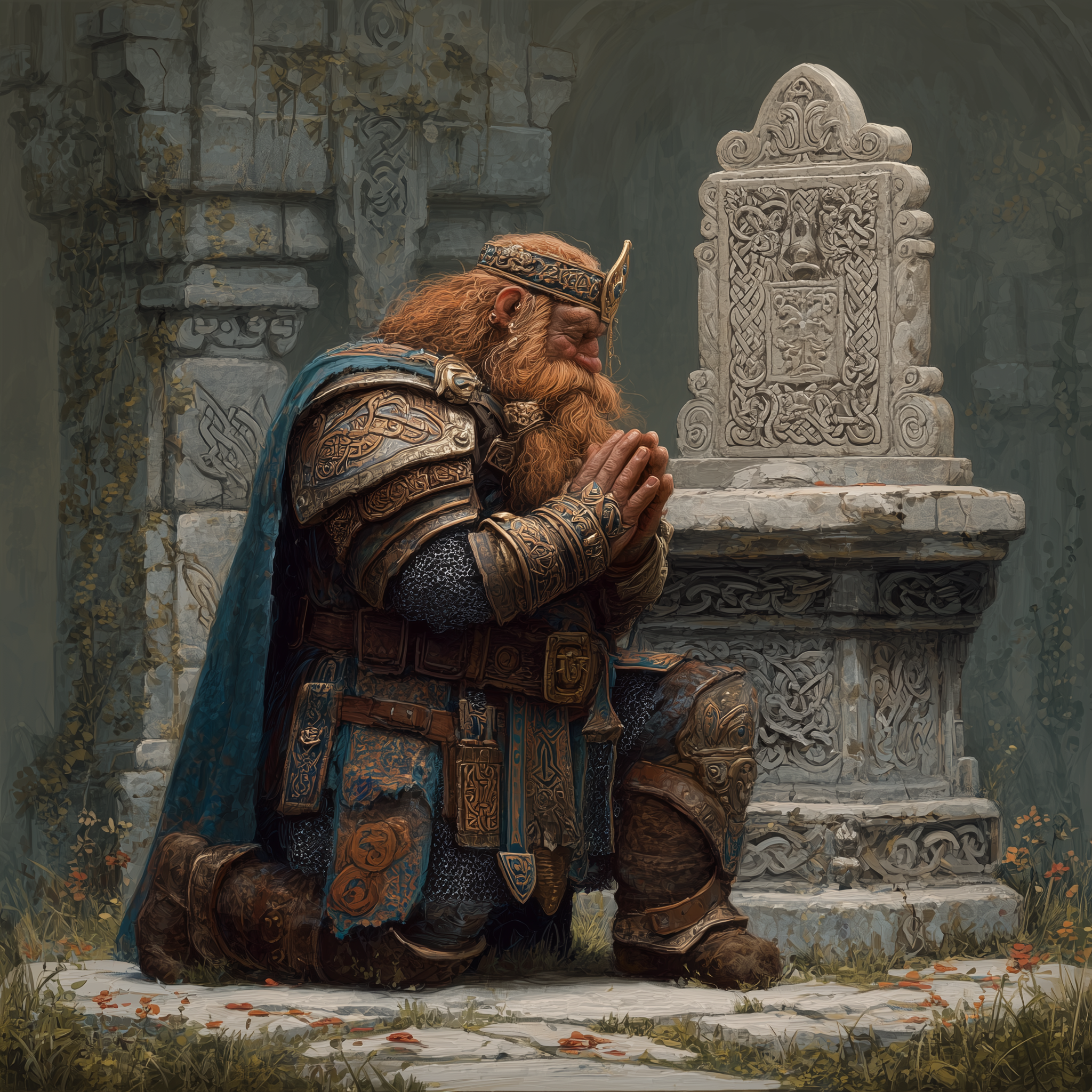 There are many famous stories of kings and queens offending one or more of the Nine and suffering legendarily awful and dramatic fates , but these stories are very apocryphal and vague. The kings and queens are never named and it happened "long ago in a distant land." The thing is, most monarchs have heard these tales and even though these are apocryphal stories cloaked in metaphor, they still cause monarchs to lose sleep at night.
 Much as a peasant is going to pray to the Nine to safeguard his/her house, a king is going to pray to the Nine to safeguard his entire land and all the people on it.
But beyond appeasing the Nine themselves, kings and queens have to appease dozens if not hundreds of priests and priestesses.
Small religious rituals are usually performed on the personal or family level, medium level rituals are performed at the community level, and large rituals are performed at the national level.
Priests and priestesses conduct the rituals, but they need support to do so. Kings and queens are usually the ones providing the resources for large veneration rituals for the Nine, mid-level nobles like Barons and Counts usually provide similar support for community level rituals.
Much as a peasant is going to pray to the Nine to safeguard his/her house, a king is going to pray to the Nine to safeguard his entire land and all the people on it.
But beyond appeasing the Nine themselves, kings and queens have to appease dozens if not hundreds of priests and priestesses.
Small religious rituals are usually performed on the personal or family level, medium level rituals are performed at the community level, and large rituals are performed at the national level.
Priests and priestesses conduct the rituals, but they need support to do so. Kings and queens are usually the ones providing the resources for large veneration rituals for the Nine, mid-level nobles like Barons and Counts usually provide similar support for community level rituals.
 Ecclesiastical politics normally covers what kings and priests do in between major rituals, and this is where things can get messy and complex.
Like ancient polytheistic rituals on Earth, religious piety often has a transactional feel in Scarterra. For kings, queens, and other powerful people, the transactional nature of the relationship between the mortal and divine worlds is even more pronounced than with commoners.
Ecclesiastical politics normally covers what kings and priests do in between major rituals, and this is where things can get messy and complex.
Like ancient polytheistic rituals on Earth, religious piety often has a transactional feel in Scarterra. For kings, queens, and other powerful people, the transactional nature of the relationship between the mortal and divine worlds is even more pronounced than with commoners.
by me with Midjourney
Most of the basic tenets of how ordinary mortals worship the Nine apply to kings and queens. A peasant family is going to venerate the Nine with prayers and rituals and hope the Nine will bestow good fortune on their family, or at least avoid bestowing bad fortune on them. The royal family is going to hope that their prayers and rituals will convince the Nine to bestow good fortune on their kingdom, or at least avoid bestowing bad fortune on them. Most Scarterran highborn families observe the same basic family-level religious observances than peasant families engage in.
The Nine can bestow health or sickness, abundance or starvation. If a kingdom has a bad year for their crops, the royal family probably isn't going to go hungry, but a lot of their subjects are going to suffer and die. Suffering subjects may rebel against their king, or at the very least are likely to engage in the passive resistance of willful disobedience.
Most monarchs care at least a little bit about the welfare of their subject. Even if rulers that view their subjects as simple resources, they at least understand that their people are valuable resources.
Medieval art of farm workers (public domain) by unknown artist
It can be expensive and time consuming, but this is usually pretty straightforward. Very few kings are foolish enough to interfere with priests carrying out rituals for the benefit of their land. Very few priests are foolish enough to hold a large ritual hostage in order to gain a short-term political advantage. The Cult of the Compact is Scarterra's primary inter-deity priesthood with a strong ritual focus. They effectively handle scheduling, so Maylar and Korus festivals aren't scheduled concurrently.
History
The various priesthoods control lots of valuable resources, and kings and queens want to turn these resources to the services of the state.
Conversely, kings and queens make a lot of decisions every day as rulers and the various priesthoods want rulers to make decisions in line with their values.
This push and pull quid pro quo forms the core of Scarterran religious politics in every nation and era, and this is how the Nine's conflicts with each other permeate into the mortal plane.

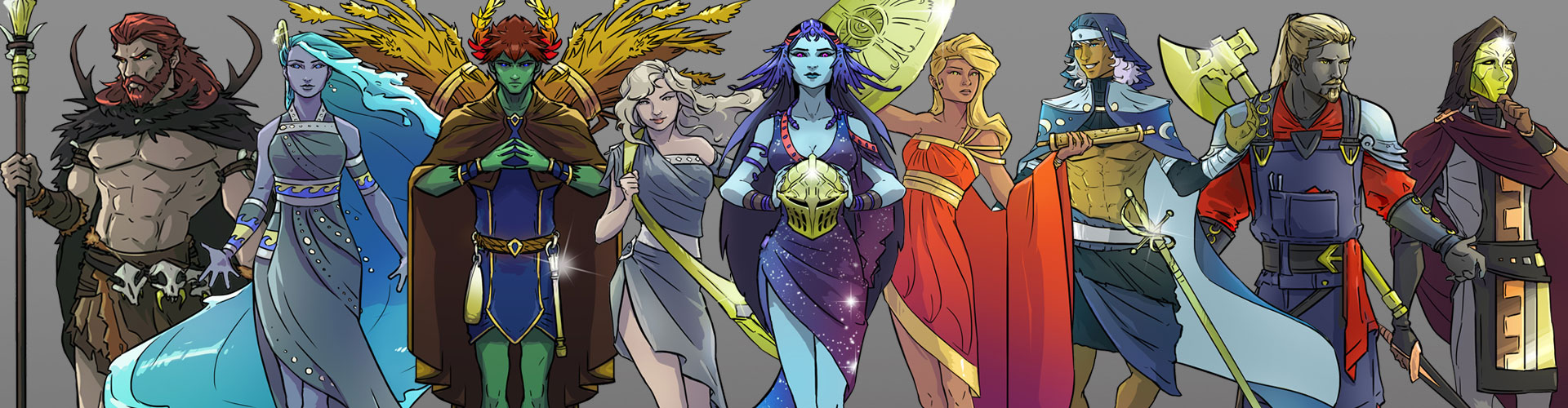
Composite Display of the Nine's portraits by Zeta Gardner
Execution
The Pillars of a Leader's Power
Rulers cannot rule without the consent of the ruled. Maybe not in the sense of a modern democracy, but monarchs still need to have enough supporters to enforce their will. On Earth, many political scientists state all regimes (regardless of government type) the backing of at least one of the following groups: the military, the merchants, the priesthood, and the bureaucracy. There is also a theoretical fifth column representing the general good will of the people. Each priestly faction has a different area of influence, but collectively the Nonagon has substantial influence over the guilds (the merchants), professional soldiers and mercenaries (the military), and various scholars, craftsmen, and experts (the bureaucracy). They also have influence and sway over the general good will of the people.In Scarterra, the greater priesthood is commonly nicknamed "the Nonagon". The priesthood is pulled in nine different directions which dilutes their political power relative to a real Earth medieval history.
The fact that Scarterran priests' political and economic power is split nine ways dilutes their influence relative to medieval Earth clergy, but the Nonagon has a significant advantage that more than makes up for this: theurgy.
Almost all of Scarterra's theurgists are affiliated with an organized priesthood of some sort, so in order to get theurgists on your side, you need to have one or more priesthoods on your side.. Theurgists wield real tangible mystic power that all kings and queens want on their side, so theurgy can easily be used to generate political power for various priesthood.
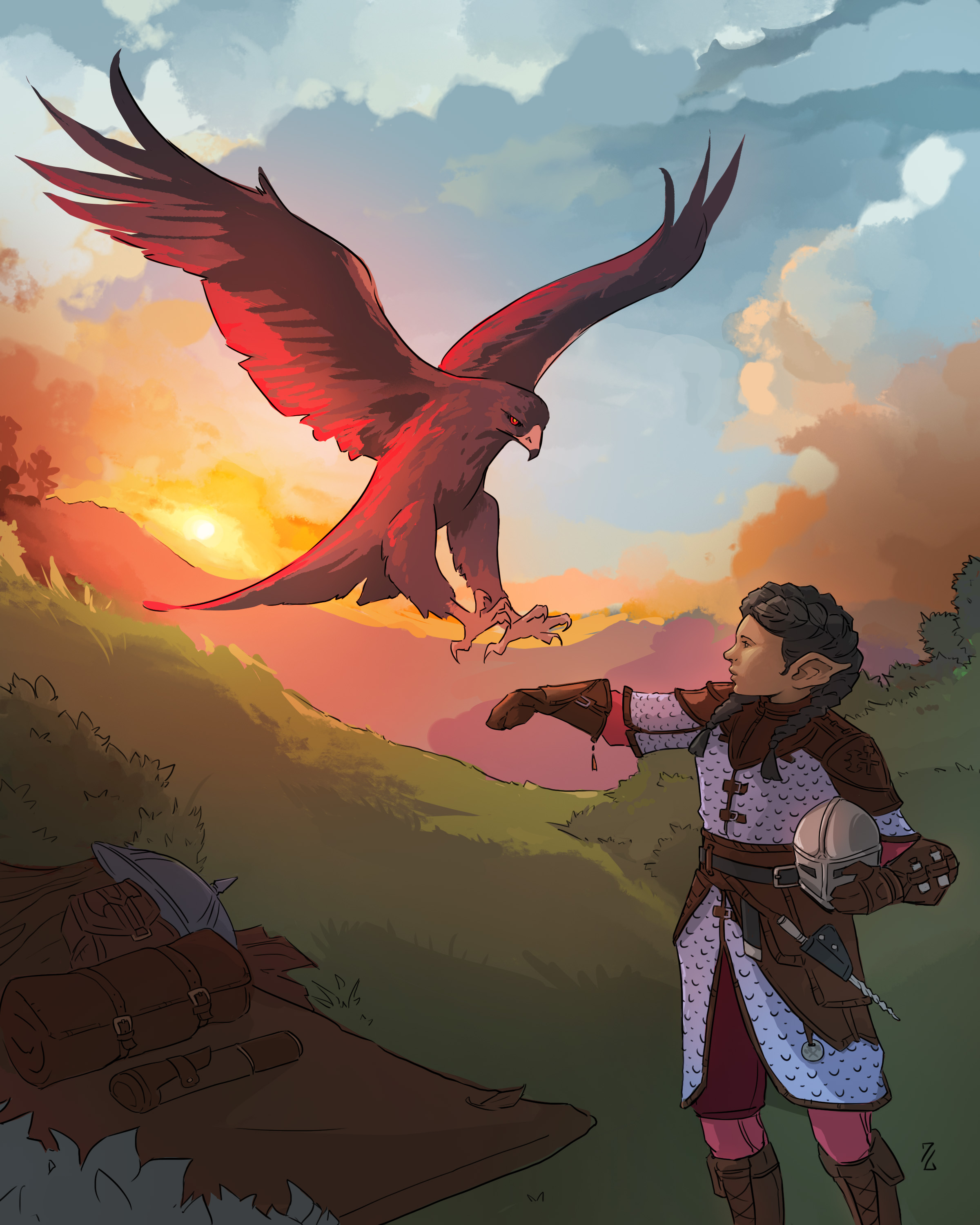
Ragani summoning Sam the spirit eagle by Zeta Gardner
Components and tools
Potential Strategy: Encourage Friendly Competition
Kings and queens are often desperate to win over Nonagon factions, but Nonagon factions are often desperate to win over kings and queens.Every priestly fashion wants their local rulers to pass laws and edicts favorable to them and their gods. This means they are often eager to win over kings and queens through flattery, bribery, and sometimes veiled threats. If a king is crafty, he can maneuver them to focus on flattery and bribery.
If the various high priests are all trying to outbid each other offering political and magical favors to the king, than that is a good place for a king to be in. This is the situation most Scarterran monarchs strive to be in because they can get lots of ecclesiastical support with minimal investment.
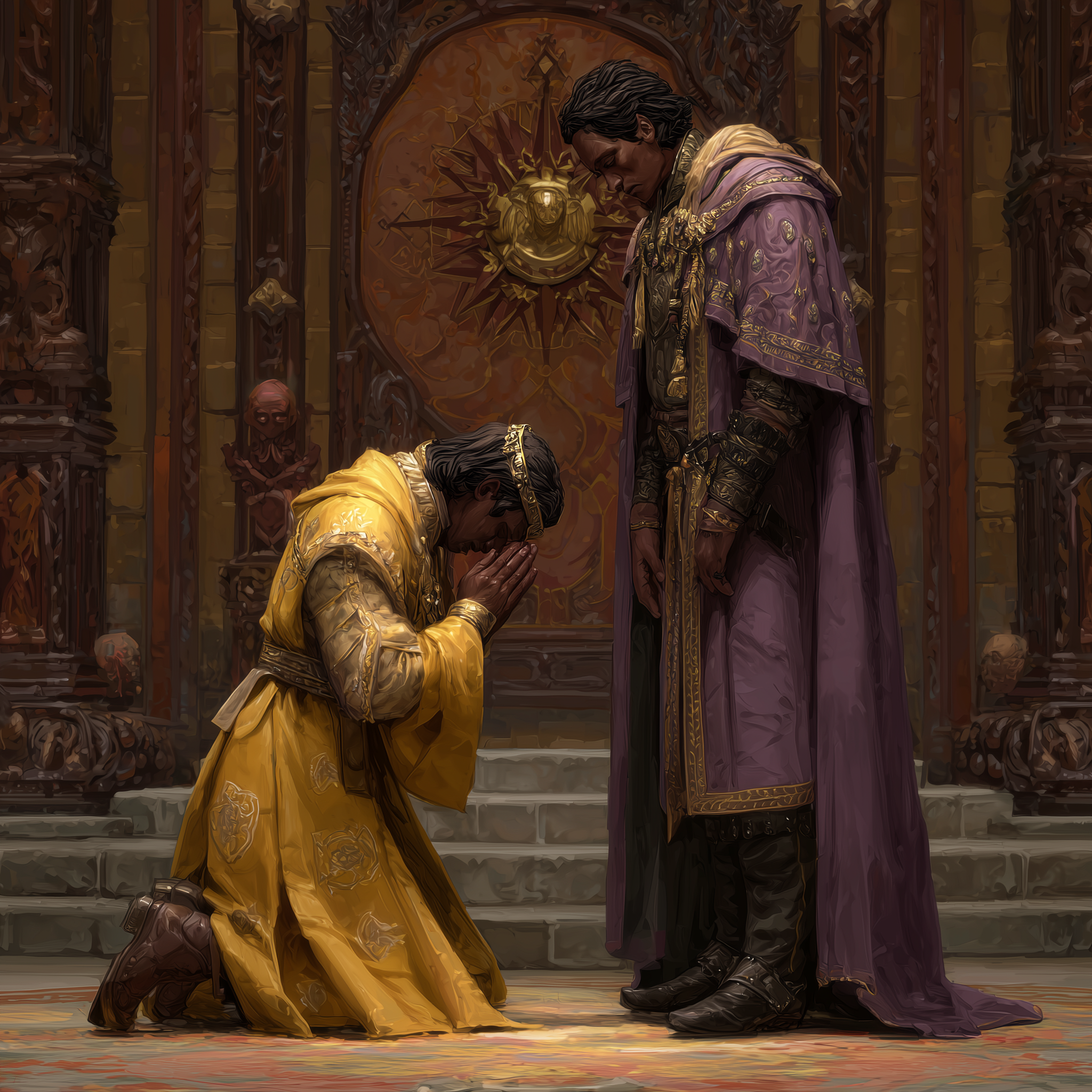
by me with Midjourney
Potential Strategy: Octagoning
"Octagoning" is a Scarterran religious slang term for shutting out one of the Nine or shutting out one of their priesthoods at least. The rationale is: "No matter what I do, _______ faction will never be happy with me, so I'm not even going to try to placate them anymore."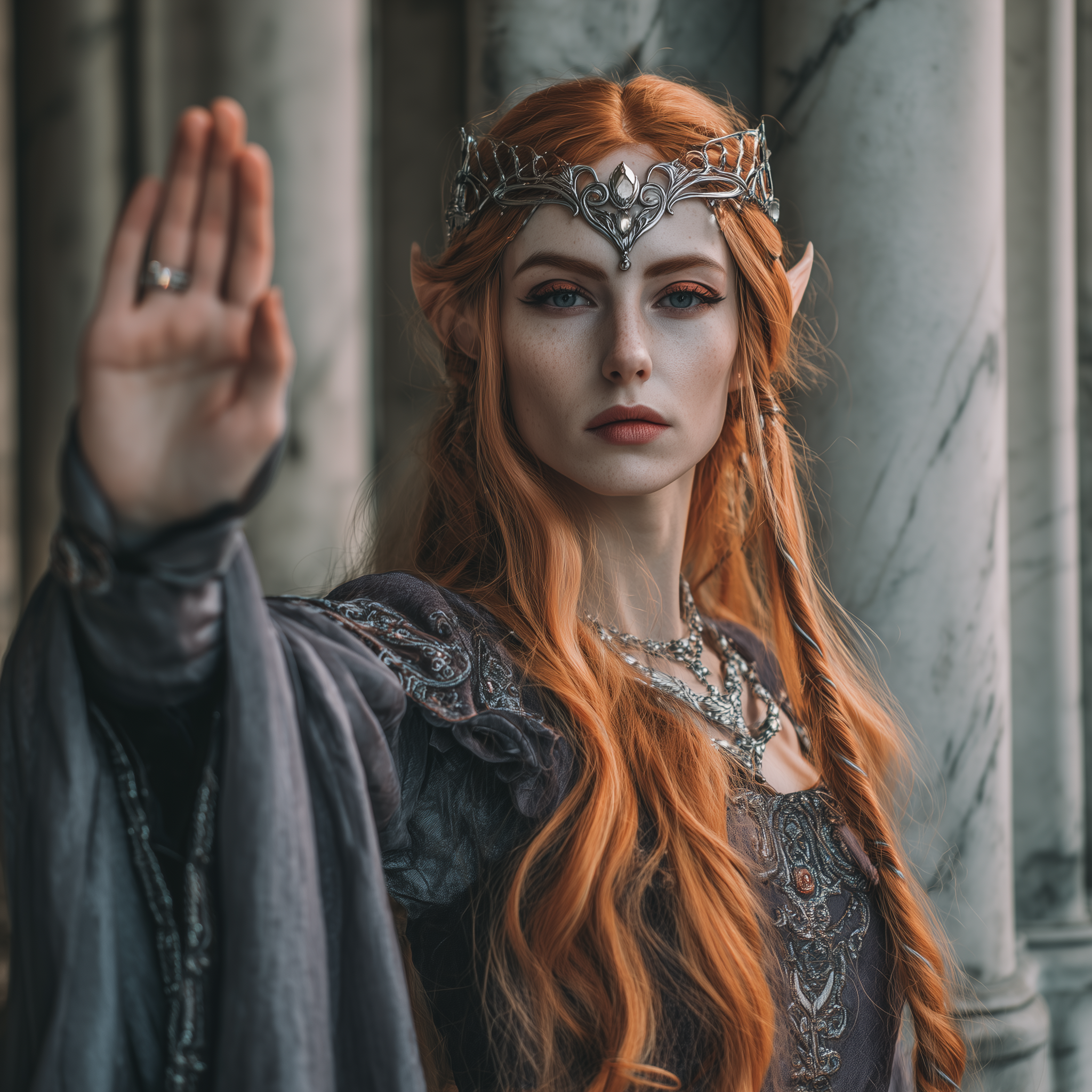
by me with Midjourney
When a queen employs this tactic, she is usually only shutting out the priesthood, not the deity itself. A king or queen can still sponsor Maylar veneration rituals while also refusing to talk to Maylar's priests and priestesses. Since the Nine are in theory unified, It's relatively routine for one priesthood to preside over a ritual to another priesthood's god or goddess.
Rather than a zero-sum binary, a queen doesn't have to publicly shun a Nonagon faction entirely in order to "octagon" them. Many choose to keep a Nonagon faction at arms' length while paying them polite lip service for appearances' sake, but not giving them an ounce of meaningful influence.
Potential Strategy: Putting your eggs in one basket
The counterpart to "Octagoning", is fora king or queen may decide to blatantly favor one Nonagon faction over all the others. Often this is hereditary with generation after generation of a ruling family being politically intertwined with a particular Nonagon faction. One obvious way a king can show great favor to a single Nonagon faction is to send his heirs to them for education. Another way is to directly appoint priests or clergy into his court. The Elven Empire is politically in bed with the Keepers where much of the bureaucracy is propped up by Keepers. The Kingdom of Kantoc is politically in bed with the Guardians where much of the army is propped up by Guardians. The nation of Kahdisteria was founded with the Children embedded in their political system at all levels.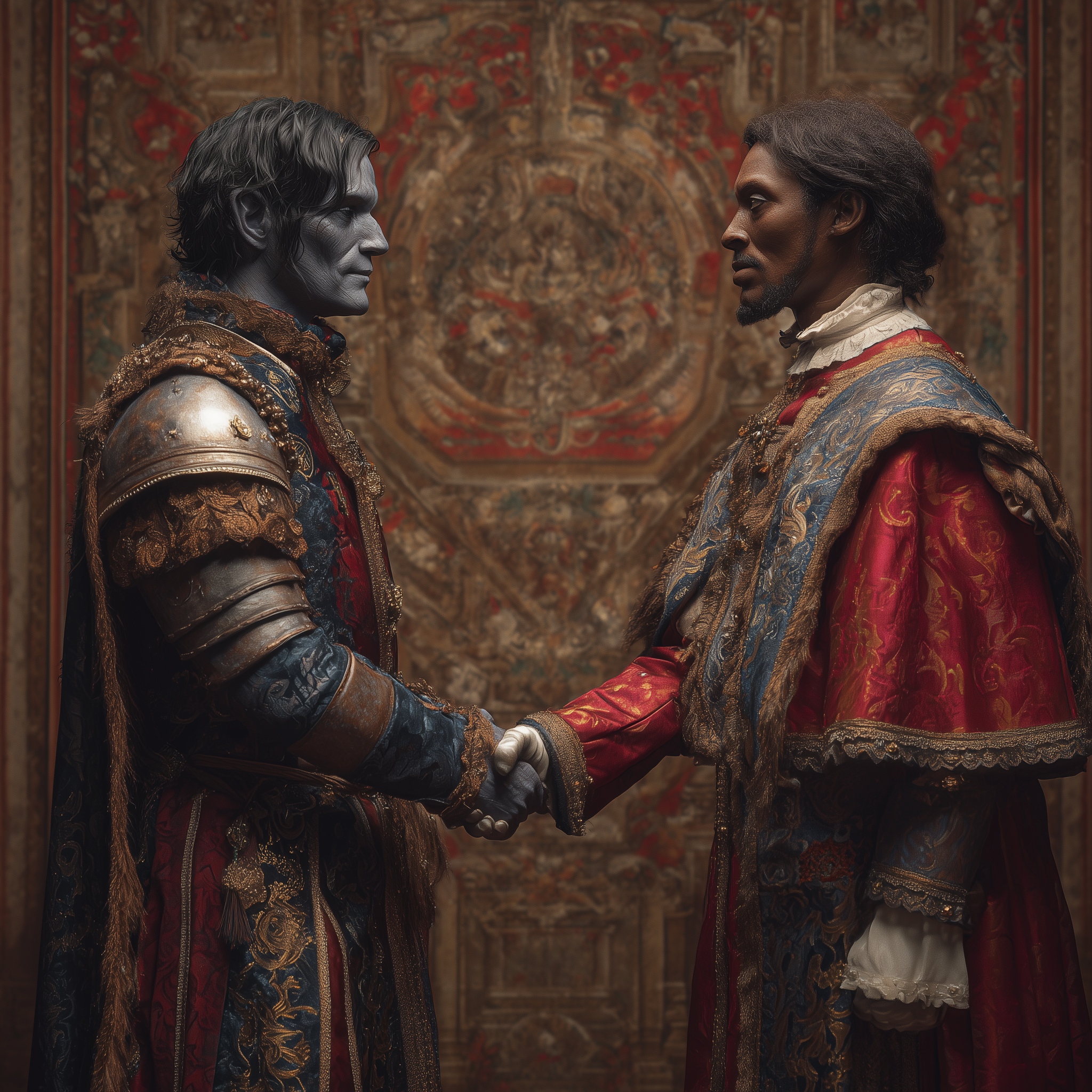
by me with Midjourney
One a smaller scale, many noble families below the royal level have opted to ally themselves with a Nonagon faction. House Frymar is politically tied to the Masks, House Fremiss-Bryallan is politically tied to the Guardians.
This is a good way for a ruler to get many powerful theurgists and other useful people in their corner, if the king has a plan for avoiding a backlash from that factions' rivals that is. Since lower ranking nobles don't get as much scrutiny as the royal family, it's easier for a count or baron to get away with this strategy than it is for a king to get away with this. The Frymars and Fremiss-Bryallans are hardly oddities in this regard.
Participants
Kings and queens in Scarterra understand that no matter how mighty they are, the the Nine are mightier than them.
It get fuzzier when dealing with the Nine's priests, priestesses, and theurgists. Politeness and diplomacy should carry the day, but sometimes rulers and clergy will posture and flex on each other for dominance. Most priests with a half a brain will be very deferential to kings and queens, but many of them can be awfully bold when talking to Barons and Baronesses, even going as far to talk down to them.
Clergyman and women may represent the Nine on the mortal planes, but they are still very much mortal. They have the same mortal biases, foibles, and personal agendas that the representatives of secular special interests groups have. Personal agendas get mixed in with godly agendas all the time, and wise kings and queens understand this.
Primary Related Location

Comments