
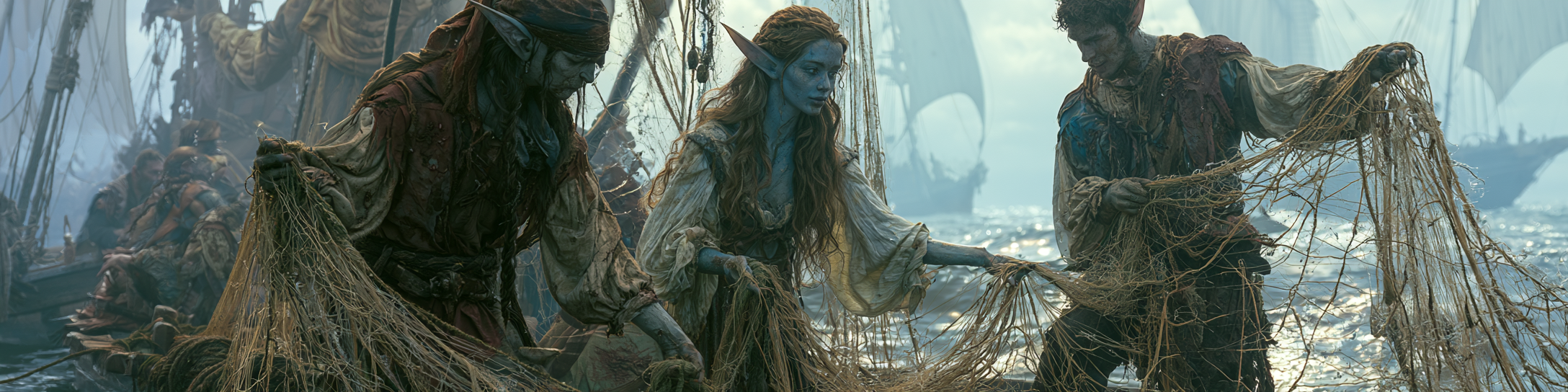
Falasarian elves
Falasarya was a late Second Age elf nation that occupied the lands now known as now known as Kahdisteria.
At their peak, they numbered around two million elves. They took heavy losses in the Second Unmaking and numbered about three thousand elves. When about forty thousand migrating Disterian elves settled on their shores and declared this land theirs, and the Falasarian couldn't have stopped them if they wanted to.
The two groups merged (mostly) peacefully. The groups had very different values and ethics, but given the harsh state of the world in the wake of the Unmaking, neither side could afford to turn down the help of the other, and they were initially just happy to find other elf survivors.
Generations of intermarriage until the Fasaryans faded away as a distinct blood line as they merged to become Kahdisterian elves. more colloquially known as dark elves.
The Falarsarian elves left small pieces of their culture beyond, eventually making a resurgence as a philosophical movement.
Culture
Culture and cultural heritage
Fakarsarian culture was very much shaped by their geography. The name "Falasarian" loosely translates into the Elven tongue "people of the coast". Falasarya was a lot like modern Chile. Falasrya was a relatively narrow strip of land with steep mountains on one side and a big ocean on the other.
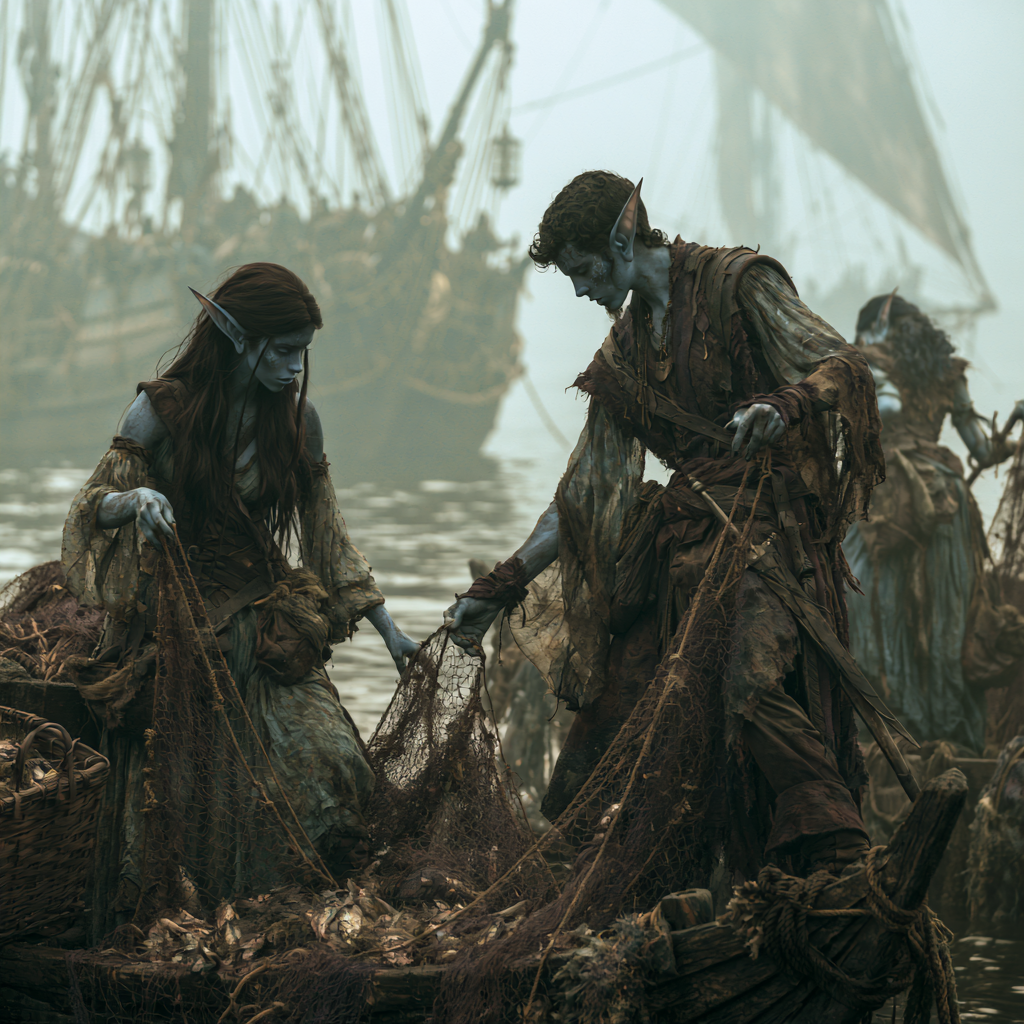
In order to make the most out of their limited land, the Falasaryan elves practiced extensive terrace farming supplemented by lots of fshing..
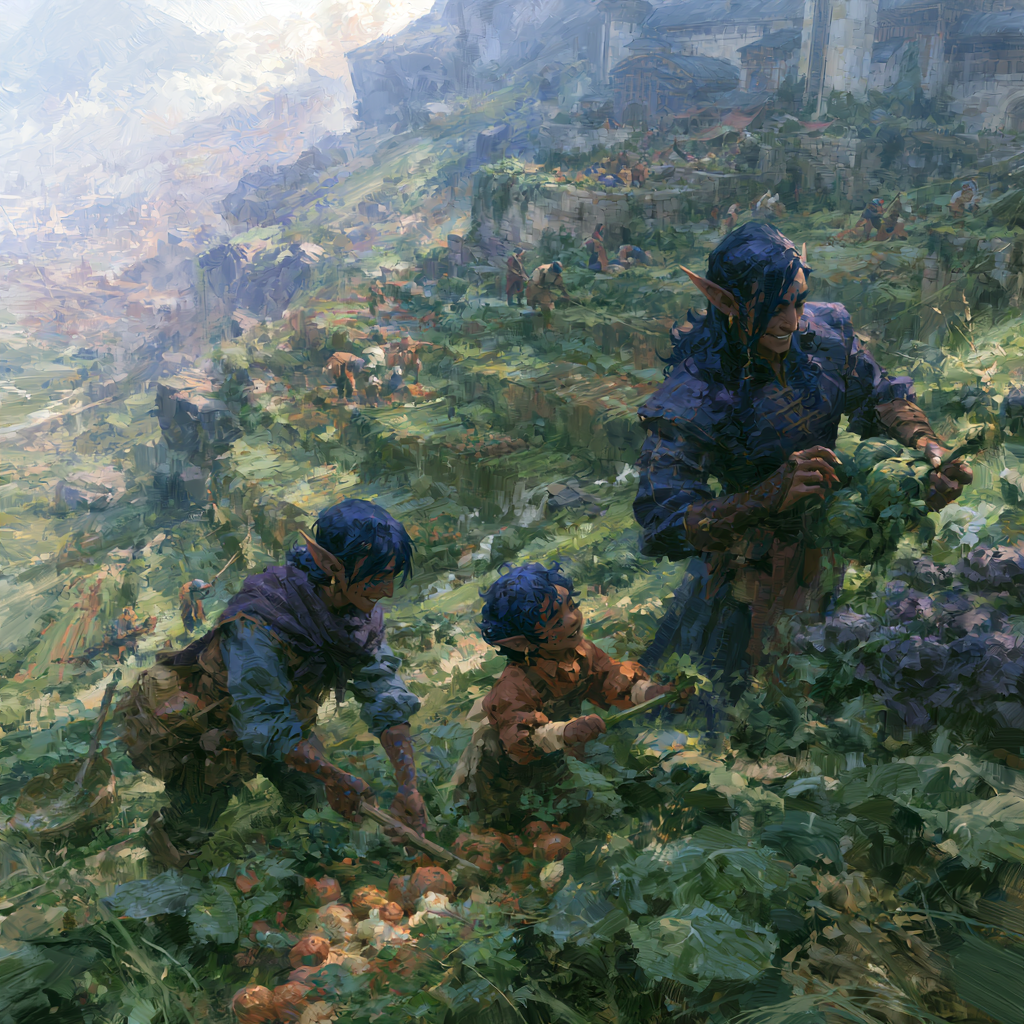
by me with Midjourney

by Me with Midjourney
During the Second Unmaking, Falasarya was not spared. Facing wave after wave of demonic expeditionary forces, the mountains eventually attracted the full attention of the Demon Lord known as "the Annihilator" and now many of the mortal races that the Falasarian elves once traded with are now extinct. Some of the Falasarian elves died fighting alongside their allies and some left them to fend for themselves.
Either way, the Falarsians were decimated. The Falarsian population was reduced from a couple million elves to a couple thousand. Only a couple hundred of their non-elven allies survived, mostly satyrs.
When the dust settled, all the remaining satyrs ended up wearing slave collars or dead, and the remaining Falasarians found it expedient to identify as Kahdisterian. At this point, the Falasarians became culturally extinct though their bloodline persisted after a fashion.
Centuries later, a Kahdisterian historian was fascinated by the Falasarians and studied up on them as much as he could. He concluded "The Falasarians had some good ideas" and the Falasarian Philosophical movement was born. (see sidebar)
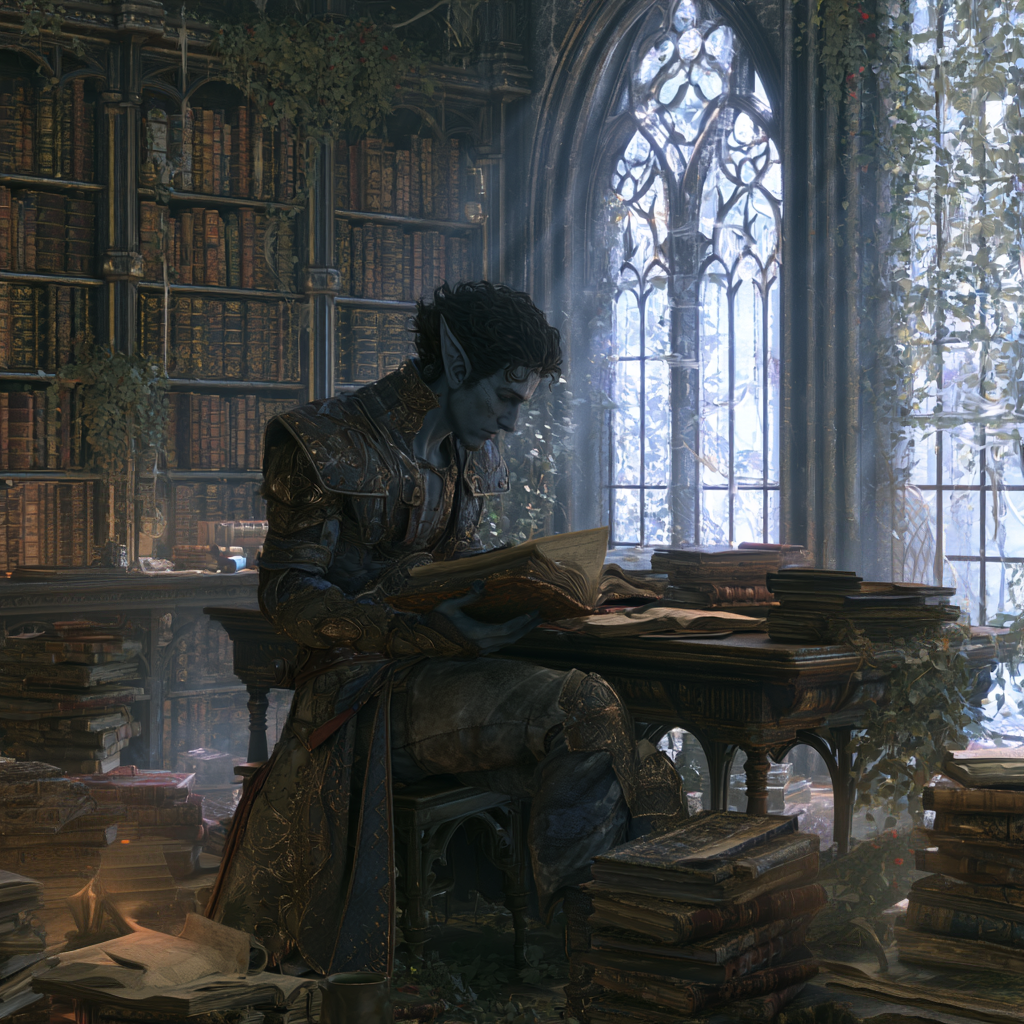
by me with Midjourney
The Falasarian Philosophical Movement
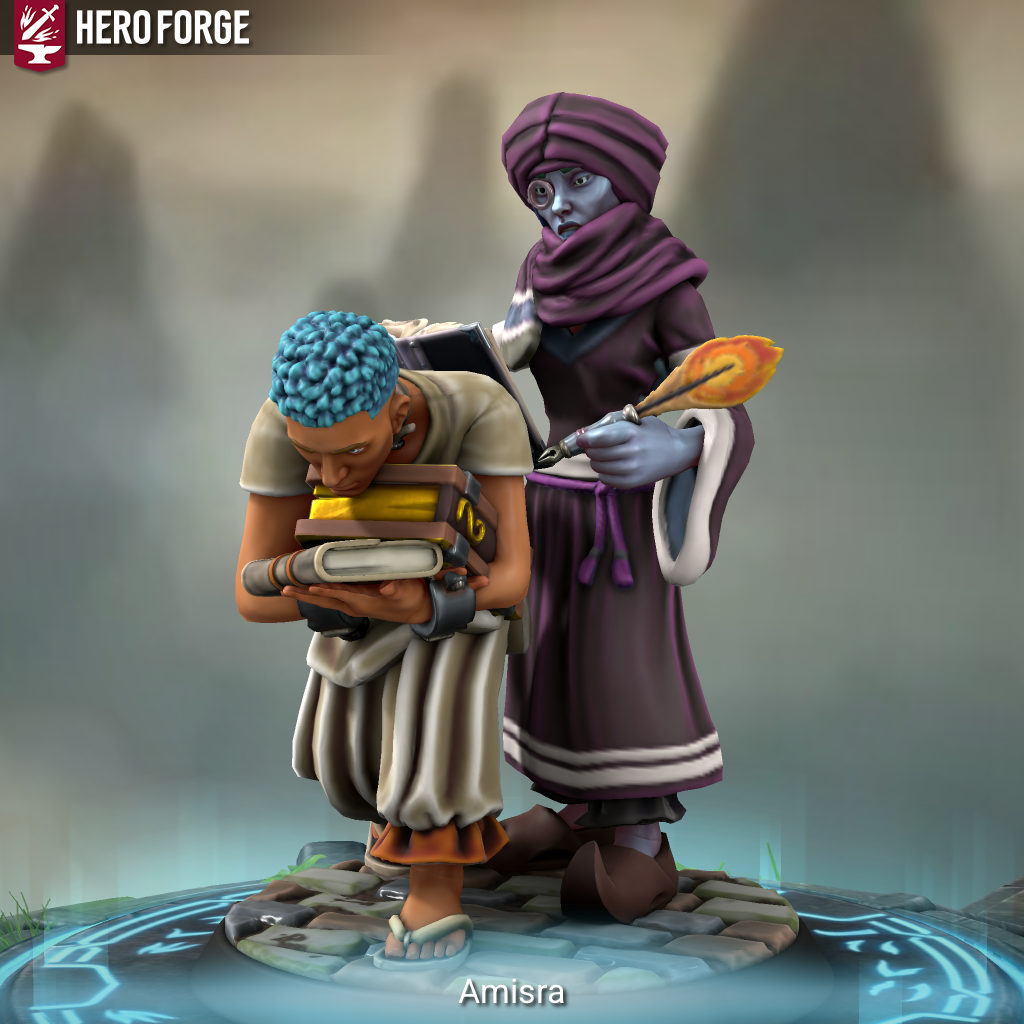
The Falasarian philosophical movement is very small and has not yet spread far beyond Kahdisterians literate classes, so most adherents are politicans or scholars or clergy. The Falasarian philosophical movement is informal. That do not have a Falasarian Flag or heraldric crest and they don't have a headquarters or have Falasarian Club meetings. But elves do say that this or that politician or this or that scholar "has Falasarian leanings" or "Is staunchly anti-Falasarian". The adherents to the Falasarian Philosophy want to abolish slavery and establish friendlier relations with human nations near and far. Not necessarily because it's the right thing to do, but because they believe this is the morally correct thing to do, but because it is the economically prudent thing to do. You can higher quality work using coin and barter to motivate workers than an overseer's lash. And you don't have to pay as many guards and wardens. Other cultural aspects supposedly attributed to the Falasarians are modesty in dress and speech, overall thriftiness, and respect for nature.-Amisra, Chief Archivist of the City of Light "Being educated doesn't mean being immune to foolish ideas. Good scholars should have open minds, but they shouldn't have minds so open that their brains fall out of their ears. By blood, I am about a quarter Falarsarian, but I would never ever identify with the so called 'Falasarian Philosophical Movement.' Every generation produces so called scholars with soft hearts and soft heads. The only thing that differentiates the Falsarian Philosopical Movement from the fools of yesteryear is a thin veneer of revisionist history on their top of their ideology."by Eron12 with Hero Forge
Diverged ethnicities
Related Locations

Comments