
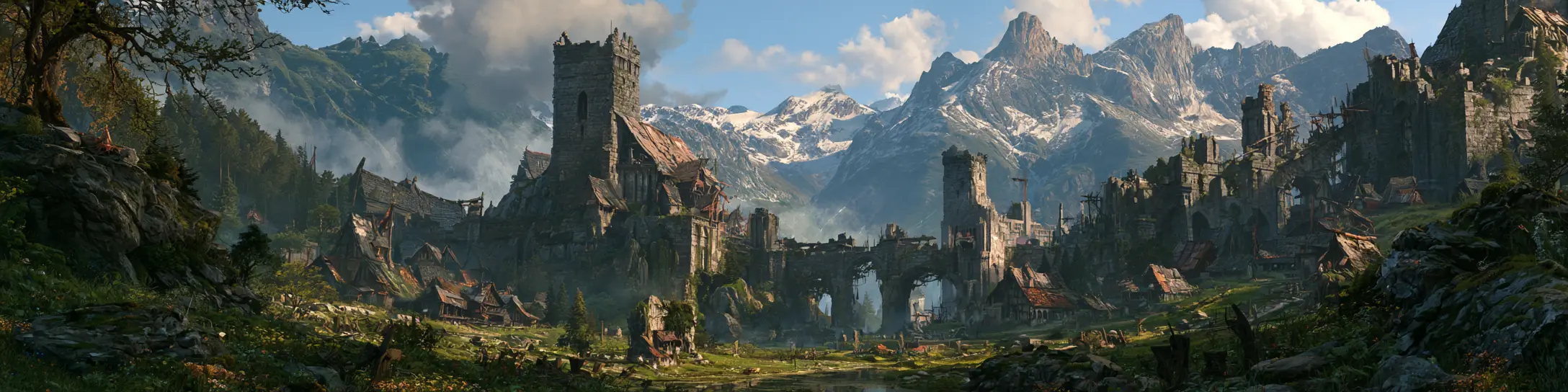
Great Mausoleum Complex
The Barony of Eternity is controversial because not only for legalizing the creation of undead soldiers and workers, but for doing it on a large scale.
The Great Mausoleum Complex is the center of this necromancy as a sort of undead logistics hub.
The Great Mausoleum Complex is the center of this necromancy as a sort of undead logistics hub.
Purpose / Function

Dallas the friendly necromancer by Eron12 with Hero ForgeUndead minions take at minimum 10 minutes to create, longer if they are intended to perform a more complicated or specialized task. "Primed" undead are created and then left inert. A primed undead can be activated in seconds.
The Custodians of Eternity manage the undead guards and workforce, but we can only command a relatively small fraction of our total force at one time. When not being commanded, our undead don't roam around willynilly, they sit inert and primed.
The main purpose of the Mausoleum is to house primed undead and allow for easy swaps. For instance, if the Barony of Eternity is put on alert, we recall our undead labor force into the Mausoleum, put them inert and before activating our reserve of undead warriors.
Most undead are specialized for very specific tasks. One undead laborer might be optimized for great strength to plow fields while another is optimized to sweep floors. Laborer undead are constantly cycled in and out of inert states to see what is needed.
We also have traditional crypts where bodies worn out or unsuitable as undead are properly and respectfully laid to rest."

by Eron12 with Hero Forge"The very notion that the necromancers give any deceased mortal a proper and respectful rest is total farce. The idea would be laughable if it weren't so revolting."
-Daana Defender of the Hearth.

Design
The complex has added to by multiple architects over the years without a long-term plan so it lacks a unified design theme.
Alterations
The Barony of Eternity currently has an estimated 60+ necromancers and 20,000+ primed undead.
When they started, they had 8 necromancers and 700 undead. The Mauseleum has been expanded and rennovated with new annexes and expansions over the years in order to accomodate more necromancers and their creations.
When they started, they had 8 necromancers and 700 undead. The Mauseleum has been expanded and rennovated with new annexes and expansions over the years in order to accomodate more necromancers and their creations.
Architecture
The top notch architects and engineers in the Borderlands or the nearby dwarf kingdoms usually refuse to take comissions in the Barony of Eternity. So the Barony has to make due with second or third rate builders desperate for work. The buildings were created adhoc one piece at a time rather than following a grand unified plan so the overall architectural style is pretty chaotic.
Normally function is valued over appearance. There is surprisingly little death motiffs in the walls and arches.
Normally function is valued over appearance. There is surprisingly little death motiffs in the walls and arches.
Defenses
The most powerful (and expensive to create) undead are kept in crypts with massive stone blocks acting as doors. The blocks are warded against stone manipulation magic so only massive strength (such as a large team of undead laborers) can open it.
The security is in place to keep rival necromancers from stealing the undead and to keep zealous holy warriors from destroying the undead.
A pervasive rumore states that the massive blocks keep the undead in just in case they slip their leash and go on a killing spree, but the Custodians of Eternity state that their control is too tight for this to happen.
The less valuable undead have smaller and simpler doors built for the same security reasons. The entire crypt grounds are regularly patrolled by both living and unliving soldiers.
The security is in place to keep rival necromancers from stealing the undead and to keep zealous holy warriors from destroying the undead.
A pervasive rumore states that the massive blocks keep the undead in just in case they slip their leash and go on a killing spree, but the Custodians of Eternity state that their control is too tight for this to happen.
The less valuable undead have smaller and simpler doors built for the same security reasons. The entire crypt grounds are regularly patrolled by both living and unliving soldiers.

Comments