

So you want to play a mage? V2
"Mage" is a catch all term for arcane spell caster which includes sorcerers, warlocks, wizards of multiple magical traditions. In Scarterra D10, most magical traditions use the same basic dice rules. Magical traditions differ far more on matters of character background and setting details than mechanical dice differences.

 Picking a magical tradition will help you figure out your character's background and assorted mundane traits easier. Any mage player should give Merits and Flaws for Arcane Casters a thorough read, but picking a magical tradition will help you narrow down which traits you want and which you don't. Magical traditions also help narrow down which mundane abilities your character should focus on.
You should figure out your magical specialty too. You could take a dot in all six schools of magic relatively easily, but such a mage would not be very effective, especially in combat or other stressful situations. Most mages in Scarterra focus on developing one or two schools of magic to a high level rather than choosing to dabble in every school.
In addition to narrowing your character's focus to something easier to grasp, each school of magic has cultural associations with them, both in fantasy in general and in Scarterra in particular. Which schools of magic you focus on impacts your mage's tangible and intangible traits at least as much as your mage's tradition does.
PCs of course are free to stick with one school of magic or pick up several schools of magic, but playtesting suggests that two schools is where most players feel comfortable. It gives players a mix of flexibility and focus to flesh out their character as a person and helps define their roles in their adventuring party.
Picking a magical tradition will help you figure out your character's background and assorted mundane traits easier. Any mage player should give Merits and Flaws for Arcane Casters a thorough read, but picking a magical tradition will help you narrow down which traits you want and which you don't. Magical traditions also help narrow down which mundane abilities your character should focus on.
You should figure out your magical specialty too. You could take a dot in all six schools of magic relatively easily, but such a mage would not be very effective, especially in combat or other stressful situations. Most mages in Scarterra focus on developing one or two schools of magic to a high level rather than choosing to dabble in every school.
In addition to narrowing your character's focus to something easier to grasp, each school of magic has cultural associations with them, both in fantasy in general and in Scarterra in particular. Which schools of magic you focus on impacts your mage's tangible and intangible traits at least as much as your mage's tradition does.
PCs of course are free to stick with one school of magic or pick up several schools of magic, but playtesting suggests that two schools is where most players feel comfortable. It gives players a mix of flexibility and focus to flesh out their character as a person and helps define their roles in their adventuring party.
 The general population, while often mistrustful of mages, generally has no problem with abjurers…unless they are on opposite end of the battlefield in which case abjurers are priority targets.

Dabbler or Master, how much magic do you want?
In the NPC mage community of Scarterra, most mages fall into one of two extremes in how they view magic. by Eron12 with Hero Forge
Some mages want to pick up a couple spells that will enhance their lives or provide a good livelihood and they don't bother developing their magical abilities beyond what they need to pursue their relatively straight forward personal goals and ambitions. Once you got a cushy gig as a court magician or some similar job, do you really need more spells?
Other mages view the acquisition of magic as a worthy goal in and of itself. They never stop trying to learn new spells even into their old age.
Most player character mages follow one of these modes of thought. Either is fine, and it is not impossible to pursue some kind of happy medium, but you should probably give this some thought into how deep you want to dive into magic as this will shape your character's background and your character's numerical traits and intangible character more than any other decision.
Is your character a person who happens to know some magic or is your character a mage who happens to have some other traits?
You should probably pick a magical tradition
Whether your character is a Fae Warlock, Greymoria Warlock, Nami Warlock, rune casting wizard, classical hermetic wizard, aesthetic hermetic wizard, Body Wizard, Folk Magician, sorcerer or some other type of mage, it ultimately boils down to the same spell list and the same attribute + casting attribute roll for every mage with that spell. Every mage casting Fire Blast uses Stamina + Conjuration to blast enemies, regardless of tradition.
It still helps character building to figure out what kind of magical tradition your mage is a part of, especially if you want her to be more than a dabbler. I created a short summaries for all traditions along with RPG guidelines in Magical Traditions in Broad Strokes. For detailed descriptions, check the links at the top of this section.
The main reason you should pick a magical tradition for your mage is because every type of magical tradition has it's own fantasy lore associated with it. This will help inform your character's social ties, both good and bad and it will help you imagine what your character looks like and and what traits she has besides magic.
by Me with Hero Forge
So you want to play an Abjurer?
Abjuration spells uses five attributes regularly, so there is no single obvious attribute to maximize. The plurality of the spells use Perception, but a lot of the most commonly used in mage versus mage fights (Dispel Magic and it's variants) use Wits. Direct protection spells usually use Stamina or Charisma. A few oddball Abjuration spells use Intelligence.You can optimize your abjurer with his or her mundane abilities. Abjurers are a diverse lot and Scarterran Abjurers come in many flavors. There is a stereotype that Abjurers are natural sidekicks or followers. Follower abjurers are often casting their defensive spells to help the ambitions and plans of more proactive heroes and villains, but a fair few abjurers can and do drive events on their own.
Abjuration is based on defense, defense in general but specifically defense against hostile magic. Some of the spells aid the abjurer and his allies on the battlefield by making them harder to hit or injure. Others aid on the battlefield by removing harmful effects.
A lot of people engaged in political intrigue want an abjurer in their corner to protect against espionage based magic. While a sidekick abjurer can quietly cast magic to shield his master’s political works, a more proactive abjurer can be a political force in her own right.
Abjuration doesn't have much in terms of offensive magic, so many casters choose to pair their Abjuration magic with a more offensive school. This can also be paired effectively with mundane combat skills. A skilled warrior with a wide variety of protective magic is a force to be reckoned with, so a disportionately high number of Scarterran warrior mages tend to be Abjurers.
So you want to play a Conjurer?
Most Conjuration spellsfall into two broad categories: elemental conjuration and astral conjuration. Most elemental conjuration spells use the caster's body as a Stamina as the base attribute and most astral conjuration spells use Intelligence as the base attribute, so players of Conjurers should raise these attributes as much as they can justify. Very few Conjuration spells use an attribute other than Stamina or Intelligence.
A great many elemental summoning spells have "Blast" in their name. For a blast spell, Stamina is usually used for the size and power of said blast, but mages still need to roll to hit their targets. Aiming a magical blast requires a Dexterity + Athletics or Dexterity + Archery roll, so it's a good idea to make sure this dice pool is high if you want your character to blast enemies away on the regular. You can even take a specialization in Archery or Athletics in (magical rays).
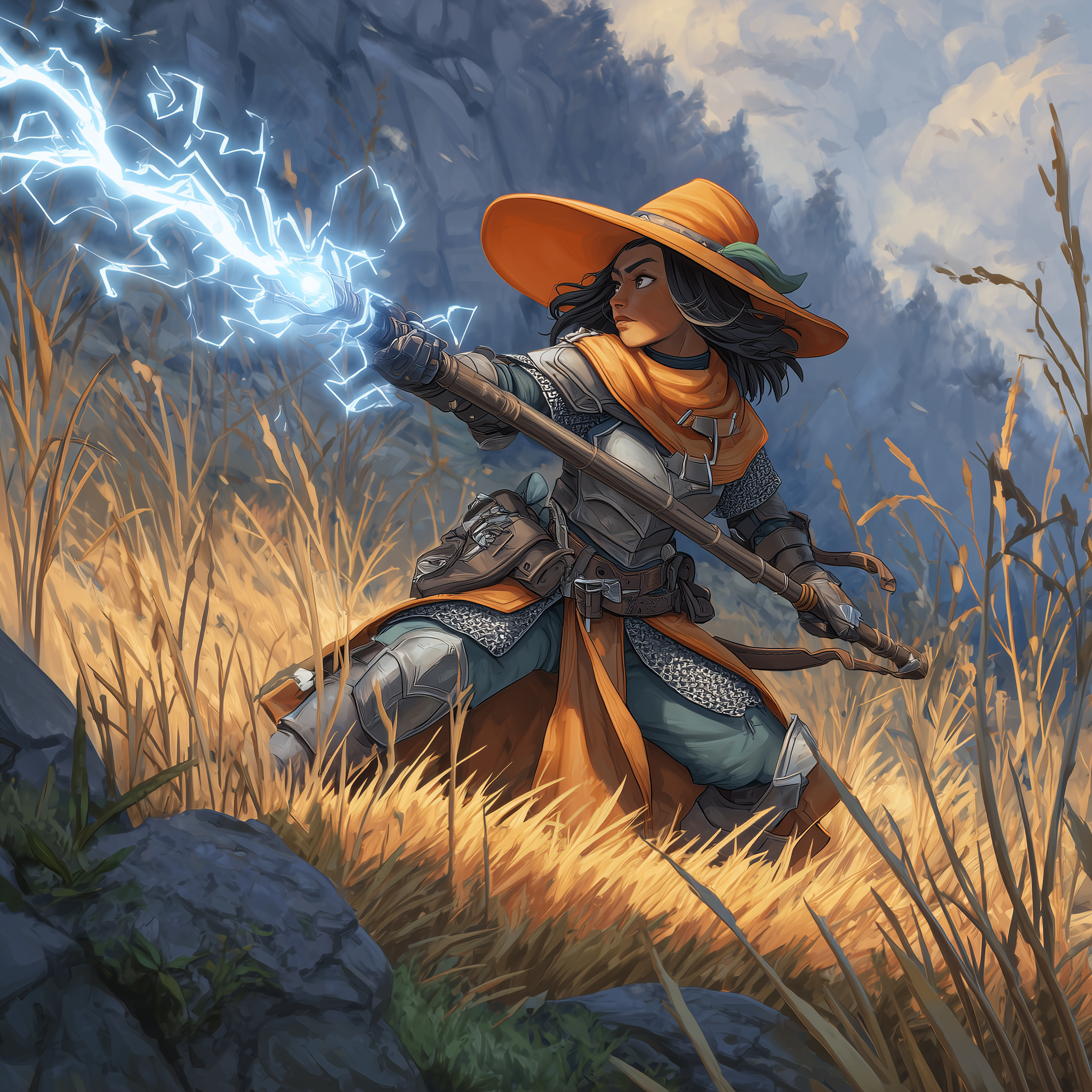
In combat, Conjurers tend to make obvious targets to the enemy., even more so than other mages. A Conjurer that plans to get in fights regularly should probably try to get a good dodge or parry pool or study up on some Abjuration magic.
Summoning astral creatures or elementals is not achievable until third circle spells are unlocked, but it is very powerful once unlocked. Base summoning spells usually rely on Stamina or Intelligence but your character's Wits score is the cap for how many conjured minions you can direct at one time, so a good Wits rating is a must for any Conjurer dreaming of commanding lots of minions.
by me with Midjourney
So you want to play an Enchanter?
So you want to play an illusionist?
Illusion uses a wider variety of base attributes than most of the other five magic lores, so it's difficult to min-max with attribute selection to pair up with the Illusion spell list. For the typical adventuring party, Invisibility and Combat Invisibility are likely to be spells in which one's strategy is going to rely on and these both take Dexterity as a base attribute. Dexterity is a good attribute for adventurers in general. While illusion can entertain or make light pranks, and a great many illusionist dabblers choose to focus on the lighter side of illusion magic. On the practical side illusion magic is very useful in stealth and espionage. A lot of more powerful illusionists focus on careers involve reconnaissance, espionage and crime.Carcelli, Parchment Background by Zeta Gardner
At almost every level, there is at least one spell with some direct combat application. More than a few warrior mages are illusionists. A great many assassins either are illusionists or else they work closely with illusionists. Illusion magic potions are among the most highly sought-after magical commodities in Scarterra as they have utility to many adventurers, spy rings, and militaries alike.
Personality wise, illusionists are often very bombastic and flamboyant while others by contrast, are very reclusive and secretive. A few truly live their lives with illusion often putting up false fronts and speaking indirectly even among their closest allies. While mad mages can pop anywhere, illusionists seem more prone to incipient madness than most other mages save perhaps necromancers.
The general populace generally views illusionists favorably compared to other mages. While illusion magic can easily be put to nefarious uses, most nefarious uses of illusion magic remain…unseen. The potential for illusion magic to entertain and delight is usually obvious and public. Those in positions of powers are somewhat less enamored by and more suspicious of illusionists often having been conned in the past, but even then, they still find benign illusionist performances entertaining.
An illusionist with high social attributes can play up the positive aspects of an illusionist's reputation and downplay the negative aspects of an illusionist's reputation.

Comments