
Yellow cloth and dye
Yellow dye is relatively easy to come by in Scarterra, but it's not so common that it's cheap, so it's kind of a mid status color to wear.
History & Usage
Cultural Significance and Usage
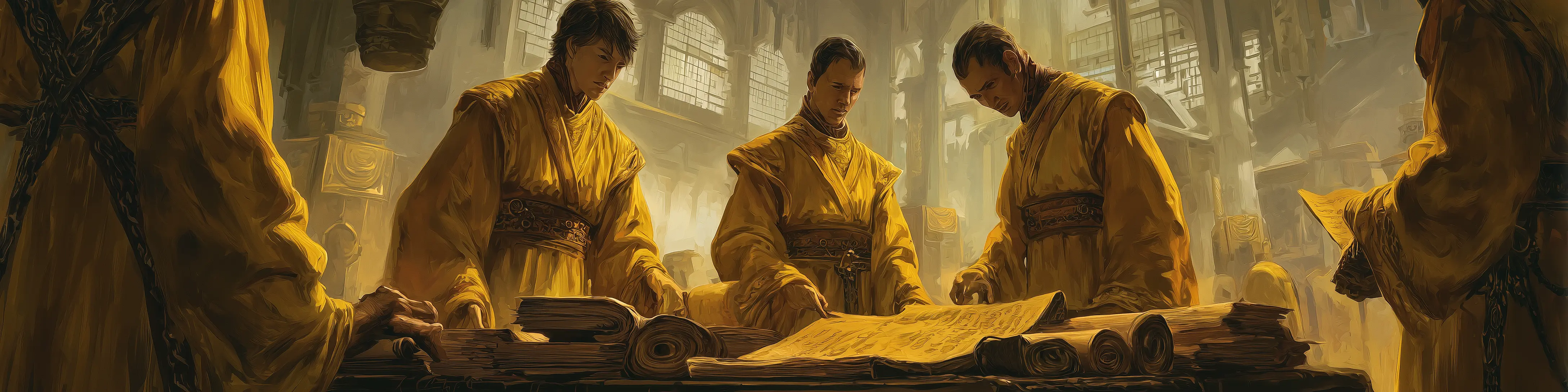
by me with Hero Forge"I'm not a big fan of the color yellow, but a lot of people won't accept a copyist or scribe if he or she isn't wearing yellow. Zeroks the gnome, maker of fine copies

Both are associated with the sun, albeit Nami's association is more indirect. Khemra represents the sun itself, and Nami represents a sunny day. Clergy of both goddesses often wear yellow vestments. Khemra and Nami are said to not have much in common besides their tenuous sun and sky connection, but both Khemra and Nami are goddesses of wisdom and knowledge, though they represent different types of wisdom. Khemra represents conventional wisdom and Nami represents unconventional wisdom. Khemra represents history and tradition, carefully preserving the wisdom of the past. Nami represents the drive to try new things and explore new places. A wise scholar respects the past while looking to the future, he respects traditions but is not enslaved to it. This is why it's very common for sages and scholars to wear yellow garments. as it honors both the goddesses of knowledge"-Akeem of Magicland, Professor Emeritus of Historyby Eron12 with Hero ForgeTo most peasants, yellow represents pleasant optimism, as in a sunny days. Nobles often lean on the heraldic symbolism where yellow represents wisdom, constancy, faithfulness, glory and generosity. We scholars cannot look at primary colors without also looking at the Nine. Yellow is strongly associated with the goddesses Khemra and Nami . Both of these goddesses' followers manifest yellow auras when they channel their patron's divine power.

Refinement
Even onion skins can be used to make dye and it's practically free because onions are commonly found in the kitchen of peasants and princes alike. Marigolds are my personal favorite for making yellow cloth. I like onions in my stew, but I don't like the smell of onions lingering on my clothes."-Green Reverend Brynnby Eron12 with Hero Forge"Yellow follows the standard among all dyes that soft yellows are fairly cheap and easy to make and bright vibrant colors are difficult and expensive to make. Saffron based dyes are very expensive because saffron is labor intensive to farm and process, but it's the best choice for those who want to wear a deep gold color and have the gold coins to pay for it. Weld is a good option. It's almost as good as saffron, and a lot easier to make. Softer yellow colors come from a wide variety of natural plants.

Byproducts & Sideproducts
Mixing blue and yellow dye will not normally produce green dye, but green cloth can be made by starting with a yellow and carefully dying it blue if you start with a very high quality yellow dye. A pale yellow will just get overpowered.
Distribution
Trade & Market
-Tanoa, gnome tailor's wifeby me with Hero ForgeMy husband makes a lot of yellow garments both fancy and plain. Pale yellow dye is commonly available and popular among a wide variety of social classes. Even rich people often wear yellow work clothes finding it more dignified than wearing brown or beige. Bright yellow cloth is either the most expensive cheap cloth or it's the cheapest expensive cloth. This makes bright yellow cloth popular among commoners of various stripes who want to look respectable and nice, but they don't want to look like they are "dressing above their station."

Yellow Wool
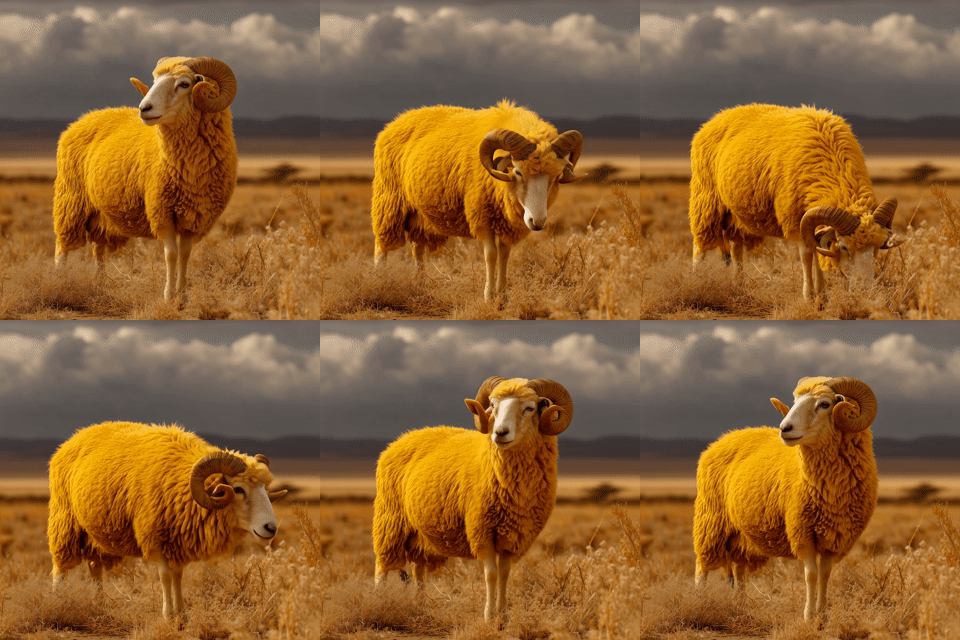
by me with Midjourney

Comments