

Thinking Medieval with a Twist: Farmers' tithes in Scarterra are complicated
This is part of my "Thinking Medieval" series
How it worked in Medieval Europe
80-90% of the population works in agriculture, that means that the vast majority of taxes are likely to be paid in the form of agricultural goods. Most lands and eras of realworld Medieval Europe had some form of a mandatory tithe imposed on peasant farmers. The Church normally took 10% of the gross products of farmers and herders. Grain, wool, fish, etc. This was backed by custom and law. Not paying the tithe was both a crime and a social faux paus.The Nonagon wrinkle in Scarterra
Due to various supernatural factors, acre-per-acre crop yields in Scarterra are a little bit higher than their medieval Earth equivalents so only 70-80% of the population works in agriculture though it still means agricultural surplus represents the bulk of Scarterra's wealth. Scarterrans are no less pious than medieval Earth peasants. If anything they might be more pious or at the least, they are more afraid of the gods because tangible displays of divine power are hardly rare. Most Scarterran peasants are willing and able to give 10% or so of their production to the clergy and most Scarterran nobility are willing and able to enforce this, but there is the issue that complicates this practice. Scarterra doesn't have one all encompassing priesthood like the Roman Catholic Church. Scarterra has nine recognized priesthoods, ten if you count the Cult of the Compact. Each priesthood has to fight for their "fair" share of this tithe and every priestly faction wants a bigger slice of the pie than they are getting. Fighting over tithes is a major source of Nonagon political struggles. There are many different ways that products of peasant labors can find their way to the Nonagon and each method has winners and losers, so a lot of political lobbying falls into this.What is the Tithe in Scarterra?

Composite Display of the Nine's portraits by Zeta Gardner
In medieval Europe, the mandatory tithe for peasant farmers was usually 10% off the gross harvest. The dictionary (and biblical) definition of a tithe is 10%.
In Scarterra the number nine is consider auspicious for obvious reasons, and because acre-per acre crop yields are a little bit higher, peasants can fork over a bigger piece of their gross harvest and not starve to death, so traditionally Scarterran use nineths and not tithes.
Secular lords adjust their taxes up and down all the time, but the traditional nineth given to the clergy almost never changes, at least officially. Scarterran clergy frequently give out free food to the poor. If a priest sees that a family of farmers struggling, he might give the family their own grain nineth back to them, but only after they offer their nineth to the Nonagon at least symbolically.
Other Sources of Income
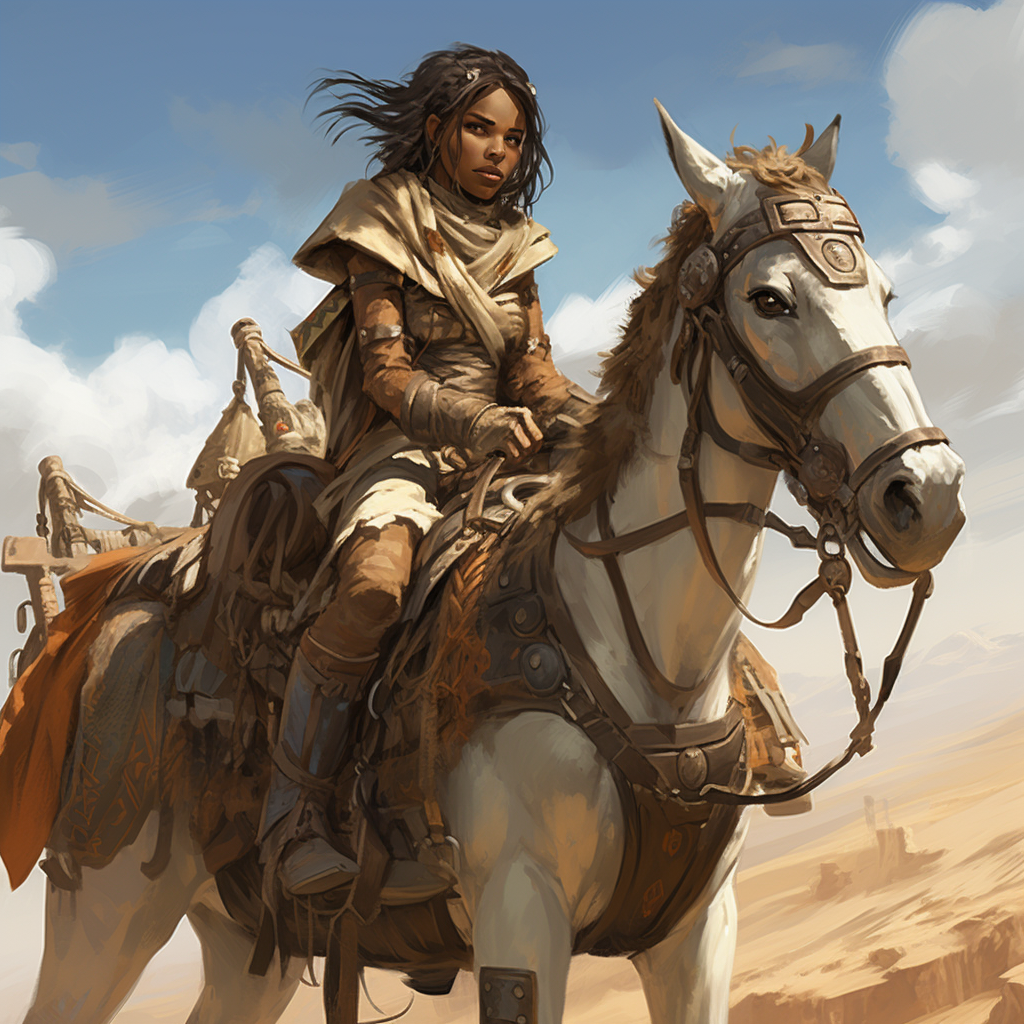
A nineth of the gross harvest of every farmer is a lot of wealth, but it's split many directions. Scarterra has ten major priesthoods and most of these priesthoods have sub-factions. Very few priesthoods can sustain their operating expenses by grain ninths alone. Clergy based on secret temples and clergy who are nomadic with no permanent base temple usually have no access to grain nineths at all. This means Scarterran clergy have to find alternate means of meeting their operating expenses.Harvest nineths are mandatory by law. A common source of additional revenue is soliciting voluntary donations above and beyond the legal minimum. Any priest or priestess will happily take any voluntarily donation big or small, but traveling priests and priestesses (commonly nicknamed "mule riders") often rely especiallyy on voluntary donations. Voluntary donations are not always in the form of money. Priests and priestesses can usually expect to receive free food and lodging while traveling. It's rarely posh food and lodging, but very few Scarterran priests and priestesses ever go hungry.
by Me with Midnjourney

by me with Midjourney
Merchants and craftsmen who are also members of the clergy are exempt from many taxes and tolls. This means that ecclesiastically aligned merchants can offer lower prices and edge out their secular competitors. In West Colassia, farmers will make their own cheese for their families to eat, but they seldom bother to sell their cheese on the open market because the Nonagon has cornered the cheese market. This practice is so common that "temple cheese" is now a slang term even when it's not literal cheese.
Participants
How is the Nineths are Distributed in Scarterra?
Sometimes peasants dictate where the tithes go. It is very difficult for a Scarterran peasant to avoid forking over a nineth of his harvest to the Nonagon, but some areas give peasants the freedom to decide which temples they send their harvest too. In these regions, the local clergy work very hard to to curry the favor of the local peasants. Sometimes Barons and low level lords and ladies dictate where the tithes go. Given that the local lords usually control the mills and graineries, most of the grain is under a lord's jurisdiction passes through his hands anyway. This gives local lord a lot of power as a middleman and gets to decide where some/most/all of the grain tithes go almost by default. In these regions the clergy work very hard to curry favor of the local lords. Sometimes kings and queens dictate where the tithes go. Monarchs set tax policy along the feudal chain, so it's a natural extension for monarchs to set the laws the govern religious donations. Very frequently, grain nineths go where the king says they should go. In these regions, the clergy work very hard to curry the favor of the royal family even more than usual. Sometimes geography dictates where the tithes go. The three-day ox rule applies to tithes as much as it applies to commerce. Maybe a peasant family wants to curry favor with the Stewards and thefamily's local lord wants to curry favor with the Guardians but the grain tithe ends going to the Tenders because the only temple within a three-days' journey happens to be a Mera temple. Some temples are built in specific places solely in order to capitalize on grain ninths. It's a carefully balancing act. Every new temple is an additional source of nineths but every temple also has a staff of clergy that will eat the grain.Coins are easier to transport long distances than wagons of grain, so it is certainly possible to sell nineth grains on the open market and then give divide the coinage among several temples. But this strategy has it's own political pitfalls. The Masks control most of Scarterra's banks and coinsmiths, so they end up taking a percentage of every large scale commercial transaction. This effectively lets them claim a slice of other priesthoods' donations. This of course raises the ire of the Masks political rivals, especially the Lanterns.

by Me with Midjourney
Exemptions from the Mandatory Nineth
Farmers are legally obligated to turn over one nineth of their gross grain harvest to the Nonagon. Their legal obligation begins and ends there. Most farmers have a vegetable and herb garden to add a little bit of variety to their daily meals. Most farmers keep livestock for protein. Dairy cows, goats, pigs, chickens. What livestock they keep varies from region to region and family to family. Many farmers gather mushrooms, berries and the like in nearby woods. Many farmers hunt and fish in their free time when legally able (or when they think they won't get caught poaching). During planting and harvest time, every able bodied man, woman, and child is probably out in the fields. In between planting and harvest, there is less work to do on the farm, and a lot of farmers make crafts, sell ale, train in the militia, work in mines, or otherwise do any number of non-farming vocations to make some coin. Secular lords often figure out sneaky ways to tax a farmer's various side hustles, but these various activities are normally exempt from mandatory Nonagon donations...at least for farmers. Priests and priestesses can and do apply social pressure for voluntary donations but they cannot legally coerce donations based on these activities.
Primary Related Location
Important Locations
Nineths and the Nobility
Baron Fyodor Deorac IV "I am a 'Grain Baron'. My duty is to help the peasants of my demesne store and transport their grain and almost all of my income comes from selling their surplus grain. Since my grain comes from the peasant after the Nonagon takes their nineth, it would redundant to give a nineth of my grain to the Nonagon, so I'm not legally required to do so. I'm not legally required to do it, but I still give the Nonagon a nineth of my gross income. We Deoracs are a proud and pious people and we would not dishonor the Nine by doing less. Most landed noblesin Fumaya give at least a nineth of their income to the Nonagon unlike those stingy heathen Swynfaredian Dragonbloods. They barely give the Nonagon half of what their Fumayan counterparts do. There is also a political element to this. Whether lowly baron, or mighty king, a lord cannot rule well without the support and goodwill of the Nonagon, at least some of the Nonagon. Giving the temples food and coins is a pretty straightforward way to curry their favor."Baron Fyodor IV by Eron12 with Hero Forge

Non-farmer commoners and the Nineth
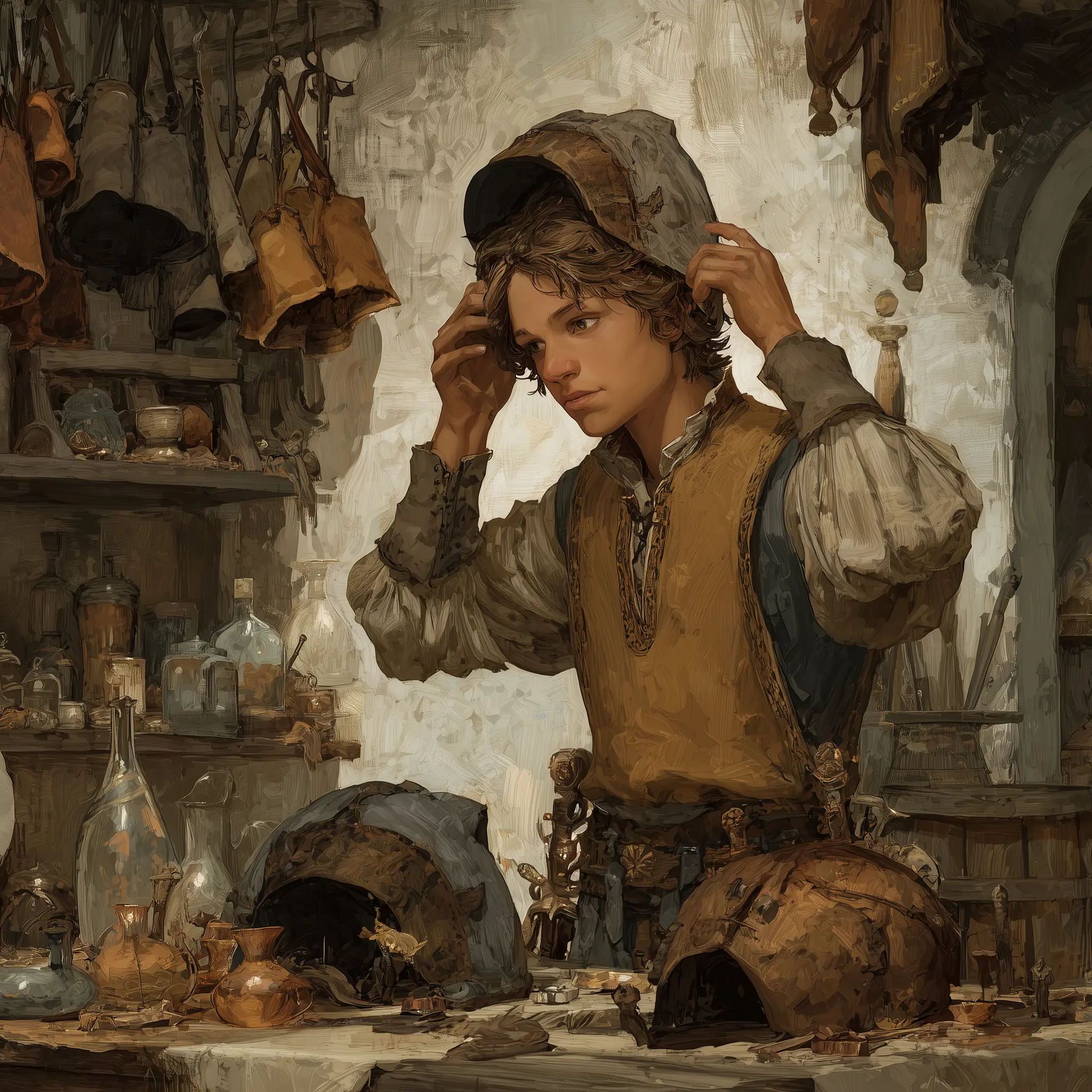
-Henio the hat maker "Farmers produce what the scrollheads call 'fungible goods'. If a farmer produces 90 pounds of wheat husks, a nineth is clearly ten pounds of wheat husks. If I make 90 hats, ten hats isn't truly a nineth of what I produce. I produce very fine hats made of fancy materials worth many silver pieces and I produce functional hats made of simple materials worth a few copper pieces. Giving the Nonagon one out of nine of my hats is not really feasible. I calculate all the money and barter I take in and compare it to what I pay for hat making materials and I give the Nonagon one-nineth of my profits. On top of this, I give clergy a steep discount when they buy hats from me, but I am a bit of a rarity. It is not a rarity for craftsmen to give clergy a discount, but it is uncommon for craftsmen to keep to keep detailed ledgers of their income and expenses. Many craftsmen lack the literacy or lack the diligence needed to keep detailed ledgers, so they are not sure what one nineth of their actual income is. I am a Double Phidas Baby, so it's no surprise I am both literate and diligent. Local laws give craftsmen a flat yearly clerical tax on all tradesmen that varies from profession to profession based on whatever form of calculation the ruling powers that be think is appropriate. The clerical flat taxes put on tradesmen are frequently shifting as the guild leaders, Nonagon leaders, and local lords play politics off each other. I don't have to pay this, because I can show my ledgers and prove I paid a nineth of my income. Most years, my nineth is actually more than the clerical tax imposed on journeyman hat makers, but I am happy to pay it as I am pious hat maker raised by clergy."by me with Midjourney

Comments